“The worst environmental catastrophe since Chornobyl disaster”: Three years after Russia destroyed Kakhovka Dam, real death toll is still unknown

(function(w,q){w[q]=w[q]||[];w[q].push([“_mgc.load”])})(window,”_mgq”);
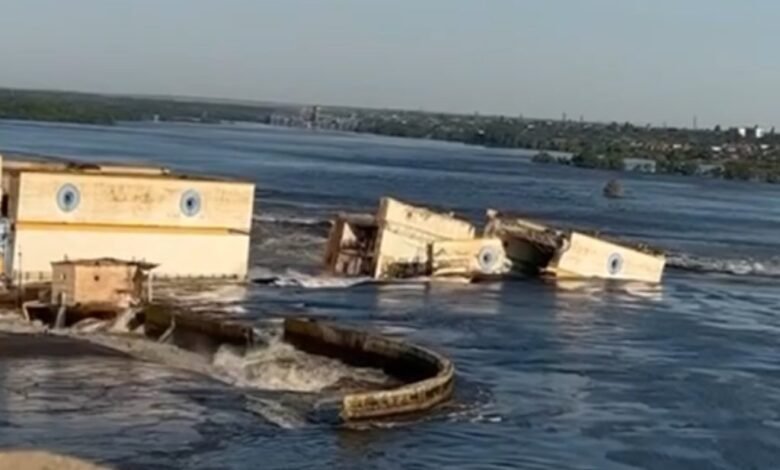
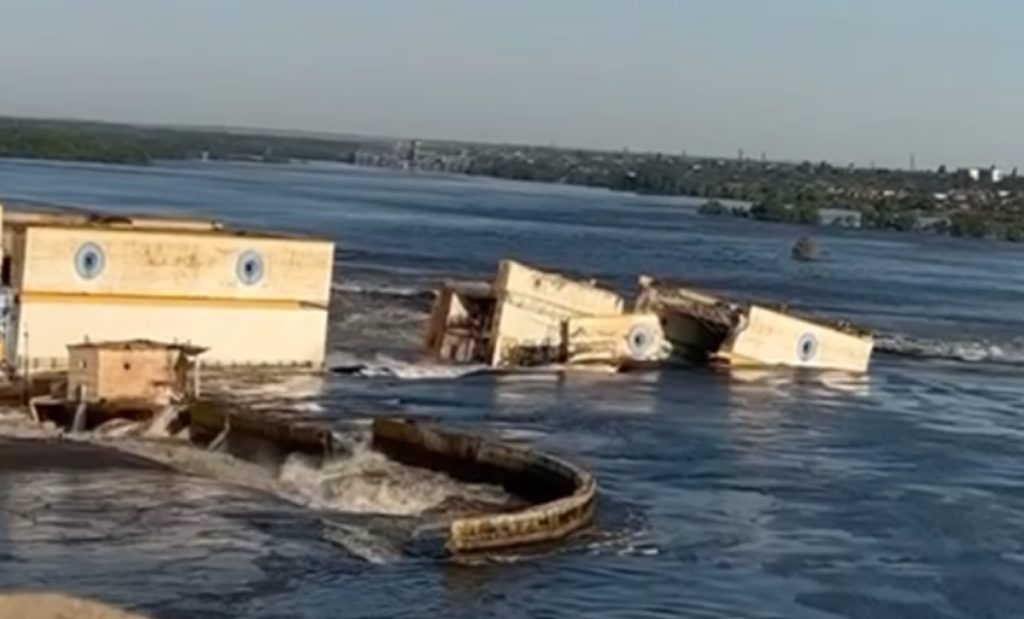
Three years after Russian forces destroyed the Kakhovka Hydroelectric Power Plant on 6 June 2023, the real death toll remains unknown. At least 34 people were killed, 80 settlements were flooded, and nearly 4,000 people were evacuated according to official figures, Ukraine’s Vice Prime Minister for Reconstruction Oleksii Kuleba says.
Kuleba calls the destruction “one of the largest war crimes of Russia against people and the environment.”
Who blew up Kakhovka dam?
Russian forces occupied the dam complex at the moment of the explosion. According to the investigation by The New York Times, the destruction required substantial quantities of explosives placed inside the dam structure — access that only Russian forces had. Ukraine’s Prosecutor General referred the case to the International Criminal Court within days, but no ICC determination has been issued specifically on the Kakhovka HPP.
The downstream effects of the destruction — flooded villages, lost Black Sea ecosystems, drinking-water crises across Kherson and Mykolaiv oblasts, and the disappearance of the Kakhovka Reservoir itself — continue to shape life across southern Ukraine.
Immediate human cost
“Three years ago, Russian forces destroyed the dam and the Kakhovka Reservoir. At least 34 people died, but the true number of victims is still unknown,” Kuleba says.
Death toll estimates vary significantly across sources, in part because Russian forces continue to control the left-bank Kherson Oblast areas most devastated by the flooding.
In the days following the destruction, Ukrainian emergency services, police, medics, and volunteers worked around the clock to evacuate civilians from flooded settlements. Over 500 municipal workers from various Ukrainian regions assisted with the recovery alongside energy and gas utility crews.
$14 billion in damage and Black Sea consequences
The Kakhovka Reservoir was the largest on the Dnipro River, holding 18 cubic kilometers of water, which was released over 3 to 4 days through the breach. A Post-Disaster Needs Assessment jointly prepared by Ukraine’s Cabinet of Ministers and the United Nations originally estimated total losses at over $11 billion.
Former Ukrainian Deputy Foreign Minister Andrii Melnyk called the destruction “the worst environmental catastrophe in Europe since the Chornobyl disaster,” per CBC News.
(function(w,q){w[q]=w[q]||[];w[q].push([“_mgc.load”])})(window,”_mgq”);
Source link