(function(w,q){w[q]=w[q]||[];w[q].push([“_mgc.load”])})(window,”_mgq”);
- It’s possible Russia launched two Oreshnik ballistic missiles at Ukraine on May 23, not one
- If so, both failed to hit anything of major military or symbolic value
- There’s growing evidence that the Oreshnik fails as a practical weapon … and as a terror weapon
Russia’s third (or fourth) Oreshnik strike on Ukraine on Saturday gave us more hints about the ballistic missiles capabilities—and serious limitations.
The non-nuclear missile, based on a nuclear-capable RS-26, is fast, powerful and impossible to intercept. But it’s also expensive, rare, inaccurate and potentially unreliable.
It’s clearer than ever that the 40-ton, approximately $30-million Oreshnik is “a terror weapon designed to intimidate,” to quote Kyiv-based consultant Jimmy Rushton. “It’s not a practical or cost-effective weapon.”
But even as a terror weapon, the Oreshnik has so far failed.
T
https://t.co/CwGNAabukx pic.twitter.com/tasHChPdHp
— kim høvik (@kimhvik2) May 23, 2026
Ukrainian analysts underlined Rushton’s assessment when they inspected the wreckage from the Oreshnik that dropped its 36 separate warheads on Bila Tserkva, 25 km south of Kyiv, on Saturday night. They confirmed that the warheads are inert. They’re filled with concrete instead of explosives, possibly because explosive warheads would disintegrate during the hot, fast terminal phase of flight.
Where the inert warheads struck is equally telling. There is a valuable target near Bila Tserkva: an airfield where the Ukrainian air force stores derelict Sukhoi Su-24 bombers. But the Oreshnik apparently missed the airfield and struck a garage complex, instead, inflicting no casualties.
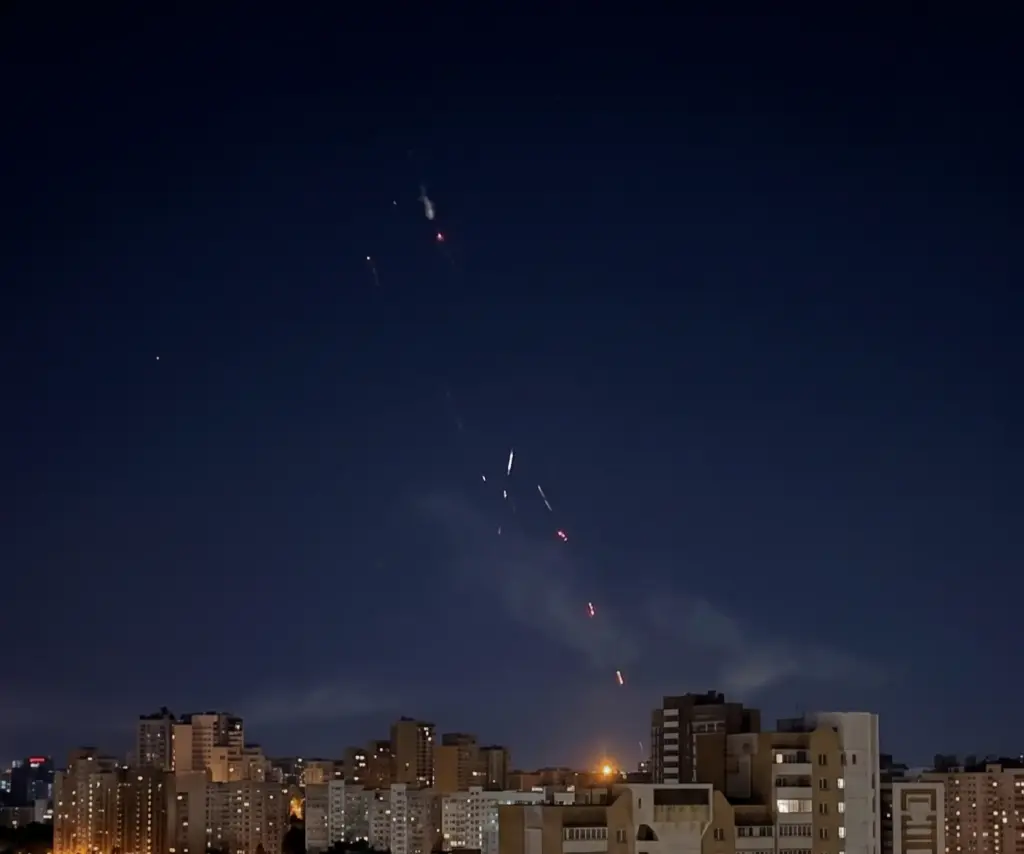
But the biggest insight into the Oreshnik’s capability, or lack thereof, is the single security camera video depicting what may be a second Oreshnik falling onto Russian-occupied Donetsk Oblast, also on Saturday night.
While it’s possible the objects that streaked down on Donetsk that night were discarded stages from the Oreshnik that hit Bila Tserkva (the Donetsk impact was just seconds before the Bila Tserkva impact, after all), it’s also possible Russia launched two Oreshniks in quick succession.
If so, it’s clear one of them failed to even reach free Ukraine. And the other apparently hit nothing of major military or symbolic value. Maybe, just maybe, the Oreshnik isn’t as terrifying as the Russians hope it is.
Impossible to intercept
It’s true Ukraine doesn’t possess any weapons that can intercept an Oreshnik mid-flight. But how much does that matter as long as the missile is rare—Russia has launched just three or four of them since late 2024—and tends to inflict little or no serious damage, mostly owing to its apparent inaccuracy?
Growing evidence of the Oreshnik’s inaccuracy and possible unreliability shouldn’t surprise missile expert Fabian Hoffmann. “The employment of the missile, both in November 2024 when it was first used and in the recent strike, suggests limited projectile accuracy,” Hoffmann wrote following the second Oreshnik strike on Ukraine on Jan. 9.
The Oreshnik is inaccurate, it seems, because its 36 warheads lack any ability to maneuver. The “re-entry vehicles are not individually guided,” Hoffmann explained. “Instead, they follow a gravity-driven descent after separation from the post-boost vehicle.”
“As a result, Oreshnik has very limited utility against most point targets, including individual buildings, air defense sites or enemy launcher assets,” Hoffmann continued. “That said, the missile may have some effectiveness against certain area targets.”
But even the Oreshnik that apparently targeted an aviation repair plant in Lviv in January—a plant that overhauls Mikoyan MiG-29 fighters—didn’t actually kill anyone, and didn’t have any obvious effect on the ability of the Ukrainian air force to keep its MiG-29s in the air.
Maybe the Oreshnik would be a real threat, or a more fearsome terror weapon, if Russia could afford to fire more than a handful of the missiles every year. “Grouped Oreshnik strikes involving several missiles and hundreds of submunitions could seriously threaten large NATO air bases such as Ramstein [in Germany],” Hoffmann mused.
“This assessment is not incorrect,” Hoffmann concluded. “However, given the high cost of each Oreshnik missile, which, while unknown, likely exceeds the price of more common shorter-range ballistic missiles in Russia’s arsenal by a substantial margin, this type of attack would be expensive. Unless it causes damage that cannot be repaired quickly, it may not be very cost-effective.”
All that is to say, Russia’s concrete-filled terror missile is getting less terrifying each time one of them falls impotently onto Ukraine.
(function(w,q){w[q]=w[q]||[];w[q].push([“_mgc.load”])})(window,”_mgq”);
Source link