(function(w,q){w[q]=w[q]||[];w[q].push([“_mgc.load”])})(window,”_mgq”);
Ukrainian drones are on a winning streak. The assessment is coming from all directions — from Russian milbloggers to international military analysts to Ukrainian warfighters to Kyiv’s Commander in Chief, Oleksandr Syrskyi.
“Starting from December, our unmanned systems units have neutralized more enemy personnel than they recruit to their ranks,” Syrskyi posted on 9 April.
Multiple Russian bloggers recently posted that Ukrainian drones are flying farther, hitting more precisely, and are getting harder to stop.
Military sources and analysts connect this trend to two factors: Ukraine having a more dynamic military-industrial system that’s better for innovation and Kyiv finally learning to start harnessing it to its fuller potential.
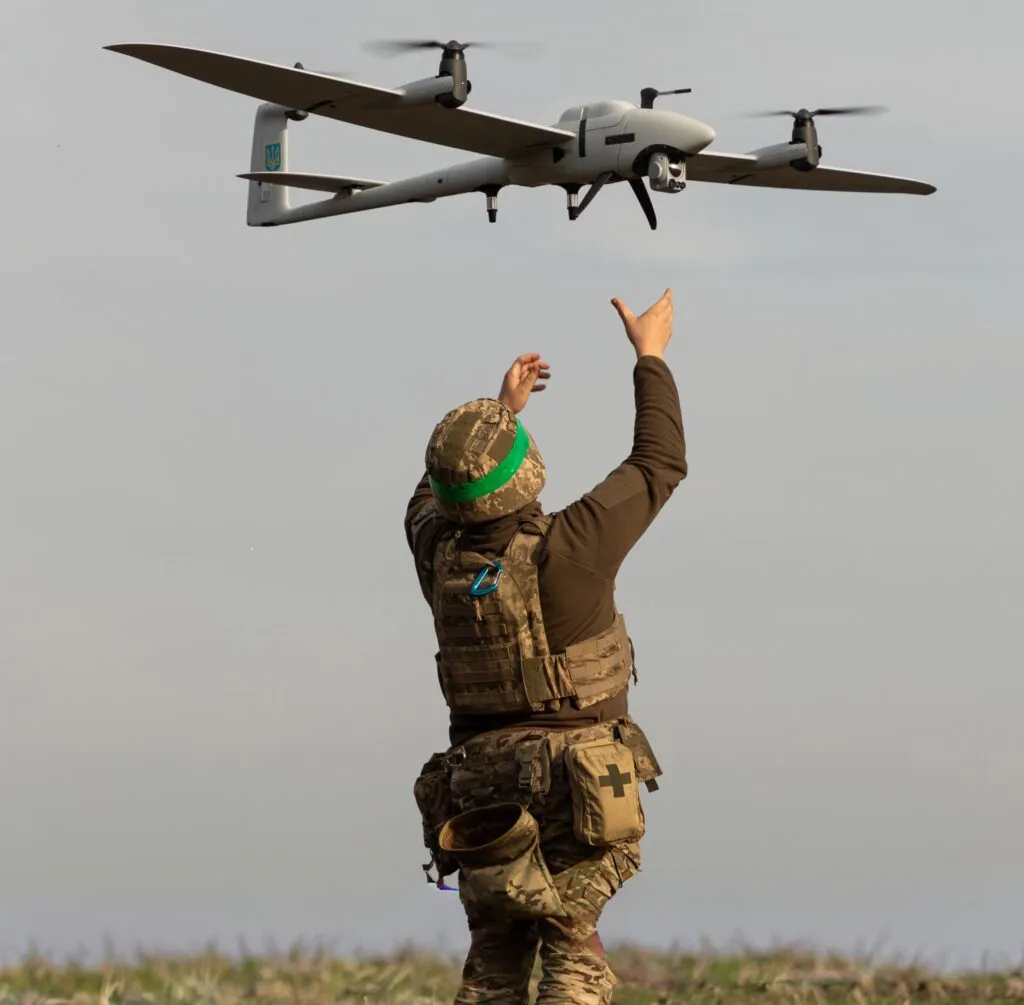
The most dramatic results are coming from mid-range UAVs, which strike targets at distances between 20 and several hundred kilometers. This appears to be wreaking havoc on Russian logistics, air defense, and other high-value targets, as seen in multiple open-source strike videos reviewed by Euromaidan Press.
The Institute for the Study of War partially credited mid-range strikes for Russia’s recent stalled advances and Ukraine’s successful counterattacks.
“As you may see from numerous videos from the other side, Russia is helpless against our medium and deep-strike drones,” Valentyn Prokopchenko, a UAV specialist with the 13th Khartia Brigade, told Euromaidan Press.
This is a welcome turnaround for Ukrainian forces, which were judged to be falling behind in drone warfare last year and in mid-range strikes more recently.
Insiders and analysts gave three reasons for this development.
- Ukraine’s defense industry has matured. What was once a menagerie of bootstrap operations has become an established industrial base that’s growing rapidly, without sacrificing the rapid widespread innovation that put it on the global map.
- Technological sophistication is increasing. While Ukraine has fallen behind Russia in jam-proof fiber-optic drones, its UAVs have gained range, speed, accuracy, EW resistance, and reliability.
- Kyiv is becoming better at scaling what works. In the past, Ukraine struggled to get the most out of its innovation, which would often plateau at the brigade level. This appears to be changing, especially after Mykhailo Fedorov became defense minister.
Many sources agree on the following picture. Ukraine has more widespread, faster innovation, while Russia has stronger scaling capabilities. Now, Ukraine’s ability to scale is rising, too. “Anything that can fly and hit moving vehicles is immediately scaled up and used by the enemy at the front,” RT reporter Aleksandr Kharchenko wrote on Telegram.
Russia has innovation as well — multiple research institutes, massively-funded industrial concerns, and of course Russian Defense Minister Andrey Belousov’s Rubicon Center, which is on the cutting edge of Russia’s drone tactics and strategy. Rubicon remains a deadly threat to defending forces.
However, the way Ukraine operates is now starting to pay greater dividends, in spite of this threat, sources said — Russia’s ability to innovate is inhibited by its top-down, autocratic bureaucracy, because of which, it cannot follow Ukraine’s example.
Successful strikes on the rise
Part of the trend is recent. According to Syrskyi, Ukrainian unmanned forces hit 50% more verified targets and dealt 29% more casualties in March, compared to February.
Syrskyi wrote that’s over 150,000 targets. Unmanned forces units are conducting more than 11,000 combat missions per day, which would mean that their hit rate is closing on 50%. ISW wrote that innovations allowed Ukrainians to inflict higher casualties in Q1 2026 compared to 2025.
In the mid-range strike category, Syrskyi wrote that 350 strikes were carried out up to the depth of up to 120 kilometers, hitting 143 logistics facilities, 52 command posts, 20 oil and energy facilities, and “many” other targets.
ISW geolocated evidence of 41 mid-range strikes in January, 61 in February, and 115 in March.
But according to open source analyst Dnipro OSINT, writing for Oboronka, this trend has also been building up since a year ago, when Ukraine’s military intelligence (GUR) posted the first video of its Spectre unit hitting 21 military assets in Crimea, most of which were air defenses.
Analyzing videos of 365 strikes over the past year, Dnipro OSINT concluded that mid-range drone strikes hit everything: deployment points, HQs, repair bases, ships, warehouses, aircraft, ships, and so on. “But Ukrainian operators seem to be focusing most on air defense – almost half of the strikes hit Russian radar stations, launchers, and other elements of the air defense system.”
Analyst Mykola Bielieskov noted that this methodical dismantling of air defenses in occupied Ukraine cuts corridors for longer-range drones to fly into Russia and hit its oil and manufacturing plants.
“The zone approximately 50-250 kilometers from the front line is becoming dangerous for the enemy,” Dnipro OSINT wrote, adding that as military infrastructure is picked apart, offensive operations are becoming harder. ISW wrote that recent evidence suggests Russian forces are facing real setbacks and recent drone innovations shifted the field in Ukraine’s favor.
“When a drone campaign begins to affect export schedules, port operations, or energy handling capacity, that is not a media story,” said Bogdan Popov, an analyst with Ukraine’s Triada Trade Partners advisory group. “That is operational pressure with strategic implications.”
Russians raise alarms
Russian milbloggers are saying similar things. While their words must often be taken with heaping pinches of salt on the best of days, posts on Telegram seem to agree that Ukraine is taking the advantage.
This week, Russian blogger Andrei Medvedev wrote that Ukrainian companies have taken a “qualitative leap” as early as half a year ago. According to him, the number of loitering munitions that can hit 100 kilometers away has “increased significantly.”
“The enemy is combining inexpensive, mass-produced strike weapons with expensive foreign-made equivalents,” he wrote. “Anything that can fly and hit moving vehicles is quickly scaled up and deployed on the front lines.”
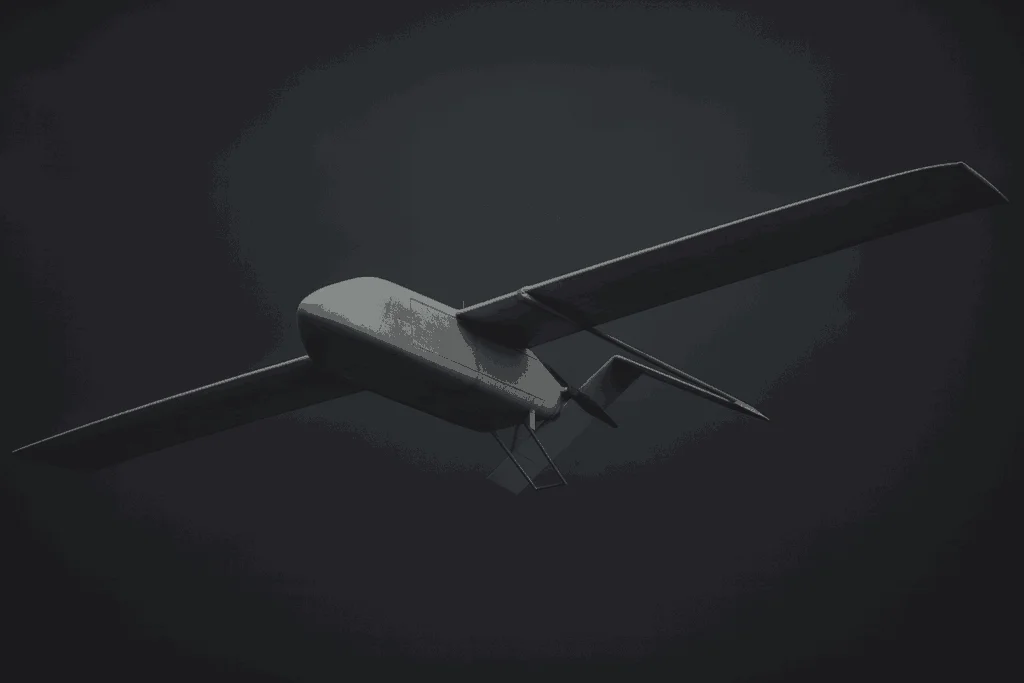
RT blogger Aleksandr Kharchenko wrote in response: “I can confirm the significant leap forward in Ukrainian UAV operations. Transports are now burning at a distance of over 40 kilometers from the line of contact. The number of enemy loitering munitions hunting vehicles within a 100 kilometer radius of the line of contact has increased significantly.”
Some Russian bloggers are stating an unconfirmed report that Belousov told Putin about a “serious technological advantage” of Ukrainian UAVs on the front. He allegedly described the situation as “critical” — that it’s no longer about the number of drones but new generations of tech.
“Putin was told directly that the enemy was using more sophisticated systems for which Russian units were largely unprepared,” the unconfirmed report said. It claimed that new drones operate around the clock, are hard to hear, hard to detect by standard equipment, and resist electronic warfare, “making conventional defense methods ineffective.”
Euromaidan Press was not able to authenticate this announcement by the time of publication. Still, Popov believes that overall Russian concerns appear to be genuine.
“Russian military bloggers are reacting to something real,” Popov told Euromaidan Press. “Their complaints reflect a battlefield problem that has become increasingly visible over recent months. Ukrainian drone strikes, especially in the mid-range segment, are becoming more difficult for Russian forces to counter.”
Better decisions, better scaling
As technology advances and the industry matures, drones have grown from being niche to universal solutions. They are used for ISR, interdiction, strikes against personnel, materiel, and armor, and sophisticated precision attacks. Drones are used for jobs that once required artillery, aviation, or much more expensive precision weapons.
Ukraine plans to make 7 million military drones in 2026, deputy defense minister Serhiy Boev said in January. The country has been able to roughly double its drone manufacturing count each year, producing at least 4 million in 2025, 2.2 million in 2024, and 800,000 in 2023.
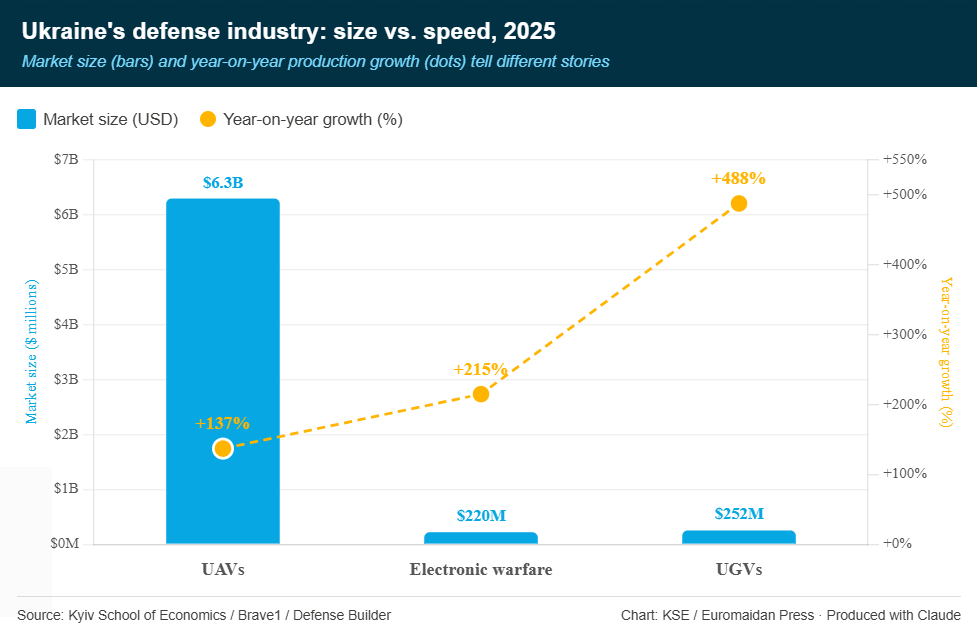
The country’s defense tech market more than doubled in 2025. The top three segments grew from $2.8 billion to $6.8 billion, the Kyiv School of Economics found in a 31 March report. Production of Unmanned Aerial Vehicles (UAVs) soared by 137% to $6.3 billion, by far the largest segment.
Thousands of Ukrainian companies aren’t just making more drones but better ones, through constant iteration with quick feedback from troops. Battery life, range, payload, EW resistance and accuracy, among other specs are being improved little by little.
“It’s the basic difference between Ukrainian and Russian approaches: Ukraine has hundreds of R&D companies and producers, which constantly compete and modernise drones and systems; Russia has vertical structure of R&D, production and scaling,” said Mykhailo Samus, a Ukrainian veteran and defense expert. “While Ukraine is always using emerging technologies, Russia is scaling the effective ones.”
Ukraine has also struggled with top-down systems, a hangover from its Soviet past. Multiple sources, including Ukrainian and foreign veterans who worked with the military confirmed to Euromaidan Press that this is a significant issue.
However, things appear to be changing in Kyiv to make it easier to scale proven technologies. Last year, Ukraine created the DOT-Chain marketplace, allowing brigades to acquire technology they trust, bypassing the central weapon procurement system, which can be cumbersome.
Brave1’s ePoints system rewards successful missions with points that can be spent on materiel, but it also has another purpose: tracking which units and which equipment has proven effective in combat.
The Russians seem to have come to the same conclusion. Medvedev on April 6 wrote on Telegram that Ukraine has built a “highly understandable system, free from unnecessary paperwork and bureaucracy, based on direct interaction between producers and consumers… Ukrainian manufacturers can safely invest their profits in new developments without fearing pressure for ‘misappropriation.'”
Another Russian blogger, Romanov Lite, concurred: “The enemy is recruiting and developing ALL operational UAV and countermeasure systems. We, however, have a strict barrier to the introduction (purchase) of new UAV systems, control systems, and countermeasures.”
Some bloggers lay blame at the feet of two figures: Yuri Vaganov, who heads Russia’s unmanned systems forces, and Russia’s first deputy defense minister Alexey Krivoruchko. Samuel Bendett, a Russia analyst with CNA said that there’s some resentment towards both figures among Russian warfighters and patriots. They come from business backgrounds, with potentially murky pasts, raising discomfort about them being in the position to make key decisions.
The Fedorov factor
Some sources who spoke to Euromaidan Press credit the arrival of Defense Minister Mykhailo Fedorov with the most recent improvements in Ukraine.
Since Fedorov came in, “the pace of technological integration has clearly accelerated. Deep-strike operations and the combat use of FPV systems have expanded dramatically. In practical terms, the tempo of deep strikes has increased at least threefold, and FPV usage has also risen by several times across a number of sectors,” Popov said.
For example, in March, Fedorov’s defense ministry created a new procurement approach, which analyzes drone effectiveness through DOT-chain, ePoints and the Delta battle management system. Then, 80% of funds are directed exclusively towards proven solutions, while 20% are reserved for innovation and buying new developments for testing.
Bielieskov also credited the appointment of Robert “Magyar” Brovdy as commander of Ukraine’s Unmanned Systems Forces in June with the growth in mid-range strikes.
“Brovdy has managed to overcome institutional divisions within the Ukrainian military and unite the efforts of different drone units, while also securing the resources for a comprehensive campaign of mid-range strikes,” Bielieskov wrote.
Read also
-
Ukraine hits oil-pumping station on route to Russia’s biggest Black Sea export port, triggering fire
-
Ukrainian intelligence called it “the last Russian railway ferry in the Kerch Strait still afloat” — now it’s out of action too
-
Ukraine’s top defense market segments more than doubled to $6.8 Billion in 2025
(function(w,q){w[q]=w[q]||[];w[q].push([“_mgc.load”])})(window,”_mgq”);
Source link