The U.S. Navy’s current challenges are often described as discrete problems, such as shipbuilding delays, maintenance backlogs, operational strain, and technological disruption. Taken individually, each is serious but manageable. Taken together, they suggest a broader institutional debility.

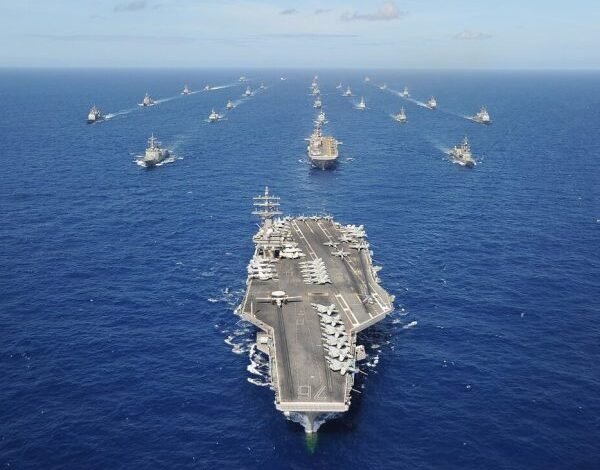
USN carrier strike group – still ruling the waves?
At the center of the problem is a closed loop of deteriorating capability. Limited shipbuilding constrains fleet growth. A smaller-than-required fleet raises operational tempo, accelerating wear, deepening maintenance backlogs, and reducing readiness. As availability declines, the burden shifts to the remaining deployable assets, reinforcing the cycle. This dynamic is not temporary; it is self-reinforcing.
Attempts to break this loop through force regeneration have been hindered by procurement failures that do not reliably translate investment into scalable combat power. At the same time, support-vessel attrition, growing threats from precision strike systems, and sustained global commitments intensify pressure on a force already operating near its margins.
The result is a convergence effect in which industrial limitations, delayed regeneration, logistics fragility, and operational strain no longer operate independently but reinforce one another. This has implications beyond readiness alone. As redundancy diminishes and margins narrow, damaging incidents become harder to absorb, strategic flexibility contracts, and conflict escalation risks rise.

The Iran War as Capability Test
Recent combat operations against Iran were a rigorous test of assumptions underlying U.S. naval power. Wartime performance did not invalidate the Navy’s enduring strengths, but it did illuminate how structural weaknesses identified in peacetime analysis manifest under operational pressure. Force protection, presence, logistics, and carrier employment all revealed narrower margins of effectiveness than prevailing doctrine often assumes.
Insufficient Force Protection
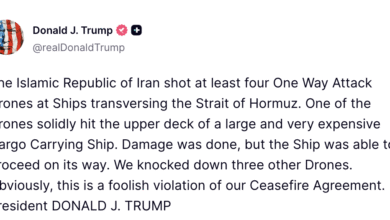
The Iran war underscored that Navy defensive systems long treated as robust may be less resilient under saturation conditions than doctrine assumed. Iranian missile and drone attacks stressed not only intercept capacity but sensor management, magazine depth, and command reaction time. The key issue is whether naval defensive architectures can absorb repeated high-volume precision-weapon attack while attaining mission objectives. The evidence suggests a narrower margin than planning assumptions often imply. The fact that Iran, a mid-sized military power, was able to hold Navy ships at risk, is an important indication of a defensive deficiency.
Inadequate Force Presence
The conflict also exposed the cost of thinly distributed presence. Naval power depends not simply on the quality of deployed units but on sufficient density to absorb shocks, maintain deterrent signaling, and reinforce threatened theaters without stripping other commitments. In the Iran conflict, the Navy lacked sufficient amphibious and mine-countermeasure capacity to secure freedom of navigation through the Strait of Hormuz. The effectiveness of efforts to interdict Iranian shipping may also have been constrained by the lack of sufficient Navy combatants in the region.
Weak Logistics
Combat against Iran once again demonstrated the neglected truth that naval power is logistical power. Sustained operations consume missiles, aviation stores, repair capacity, fuel, and sealift at rates often underestimated in peacetime planning. Weakness in replenishment and support architecture magnifies every operational problem, because attrition in logistics compounds attrition at the point of contact. The Iranian missile threat restricted naval access to U.S. bases in the Persian Gulf, limiting replenishment of weapons and other ship supplies in the theater. Fleet supply ships were insufficient to make up for the loss of local harbor replenishment.

USN fleet replenishment ship – unglamorous but essential
Limitations of the Flagship Carrier
Aircraft carrier operations revealed not obsolescence but growing conditionality. Their effectiveness increasingly depends on layered defenses, munitions availability, and permissive operational geometry. To avoid Iranian missile and drone attack, U.S. carriers remained hundreds of miles offshore, thus reducing the effective striking power of their air wings. The carrier remains potent, but its freedom of action may be narrowing, even as U.S. global strategy leans more heavily upon it.
The Capability/Mission Gap
The deficiencies exposed in combat against Iran point to a broader problem beyond wartime contingencies: a widening gap between the missions the Navy is expected to perform and the capabilities available to sustain them. This gap is not confined to force structure alone, but extends across doctrine, industrial capacity, and strategic commitments.

Expeditionary Warfare
A widening gap has emerged between inherited expeditionary ambitions and the force structure available to support them. The Navy remains organized around global crisis response, distributed presence, strike projection, and amphibious support, yet the fleet increasingly struggles to sustain these missions simultaneously. The problem is one of unchanged strategic ambition confronting shrinking means. Moreover, the proliferation of precision-strike technologies to smaller states and irregular forces poses new challenges to aging naval platforms and legacy operational doctrine.
Sea Control
Sea control has returned as a harder problem than post-Cold War assumptions anticipated. Precision strike, undersea competition, and distributed maritime threats make U.S. command of the sea less a background condition than a contested objective. Yet force planning often treats sea control as an inherited norm. Faced with the growing deep-water fleets of other powers and the arithmetic of sustaining current models of manning and deployment, the Navy will encounter increasing limits on its ability to perform this mission.
Force Regeneration
At the heart of the Navy’s regeneration problem is a deeply flawed procurement cycle. Requirements expand during development, and technological ambitions often outrun engineering maturity. Acquisition timelines are often too long to adapt to changing strategic conditions, while production processes fail to scale efficiently once programs encounter trouble. Rather than moving predictably from concept to deployable capability, major programs often enter extended cycles of redesign, integration difficulty, schedule slippage, and reduced procurement quantities, which in turn raise unit costs and further undermine scale. This dynamic results in more than inefficiency; it creates regeneration without reliable renewal, where investment sustains replacement without restoring force structure at the pace strategic demands require.

Nuclear Deterrence
Strategic deterrence imposes a second burden often underappreciated in naval debates. Recapitalization of the ballistic missile submarine force is indispensable, but it also consumes industrial and fiscal capacity otherwise available for broader fleet regeneration. Deterrence remains essential, but it crowds conventional capability. Repeated delays in key submarine programs risk slowing recapitalization of the ballistic missile submarine fleet and placing additional stress on the foundation of U.S. nuclear deterrence.

Columbia class ballistic missile submarine – still under construction
The Necessity of Institutional Reform
The deterioration of the U.S. Navy will not be reversed by spot fixes and patchwork solutions. An institutional overhaul addressing force structure, weapons procurement, and military doctrine will be required to overcome the dysfunctional dynamics of failing programs and policies.
Technology Reappraisal
The Navy’s difficulties indicate a need to change a development model that equates increasing technological sophistication with rising effectiveness. Some technologies add decisive value; others impose integration burdens that outrun operational return. A serious reappraisal would distinguish between capability growth and complexity accumulation. A rigorous evaluation of technology maturity should precede major production and deployment decisions.
Mission Scope Review
No military institution can indefinitely expand commitments while treating force structure as a secondary adjustment variable. Strategic demand must be reconciled with available means. That requires not only procurement reform but a reassessment of mission scope itself. Navy leadership must be capable of pushing back against strategic commitments that the force cannot sustain.
Quantity–Quality Rebalance
For decades the U.S. has often sought exquisite capability at the expense of numerical resilience. Yet scale has strategic value of its own. Presence, redundancy, and attritional staying power cannot be engineered entirely through superior platforms. In a major naval conflict in the Pacific, the United States would confront not only China’s enormous industrial capacity but the strategic risks of force quantity mismatch: magazine depletion, replacement asymmetry, and reduced ability to absorb attrition over time.
Contractor Discipline
Procurement failure is not only technical; it is institutional. Programs that absorb escalating investment while underdelivering capability represent governance failures as much as engineering failures. Recovering naval effectiveness would require far stronger discipline over contractors, incentives, and acquisition assumptions. That means tighter control over requirements growth, stronger accountability for chronic cost and schedule overruns, and procurement structures that reward reliable, scalable delivery rather than extended and over-complex development. The objective is not hostility toward contractors but restoration of a system in which industrial performance is judged by combat capability delivered, not merely programs sustained. In that sense, procurement governance is not peripheral to naval regeneration; it is part of naval regeneration itself.
Conclusion
The U.S. Navy retains substantial operational capability, but its ability to generate and sustain that capability is increasingly fragile. Leadership changes may alter priorities or execution, but they do not address the underlying structural problems. The central issue is not the performance of individual programs or commanders, but whether a system operating under growing constraints can restore its capacity to meet strategic requirements. In order to remain the world’s dominant naval military force, the U.S. Navy must undertake radical institutional reforms. The alternative is gradual contraction, with the possible risk of a calamitous defeat if political demands continue to exceed diminishing capabilities.

Source link