The Art of Leaving Things Undone: Jerry Markham’s Expressive Western Paintings

The Canadian Context
Jerry lives and works on a ranch in British Columbia’s Rocky Mountains with his wife, Leah, surrounded by the kind of wilderness that provides endless subject matter. The location is both practical and philosophical. Proximity to wildlife allows regular observation. The dramatic landscape offers constantly shifting light and atmospheric conditions. But more importantly, the isolation supports the kind of sustained studio practice necessary for genuine artistic development.
The Canadian Rockies differ from their American counterparts in subtle but significant ways. The light is cooler. The wilderness feels less conquered. Wildlife populations remain robust. These qualities inform Jerry’s work, giving it a particular character that distinguishes it from other Western art. His paintings carry a northern sensibility, a different relationship to wildness and space.
Working from this location also positions Jerry within the strong tradition of Canadian landscape and wildlife painting. Artists like Robert Bateman established international reputations for Canadian wildlife art, creating market awareness and collector interest. Jerry benefits from this foundation as he carves out his own distinctive approach.
The Technical Philosophy
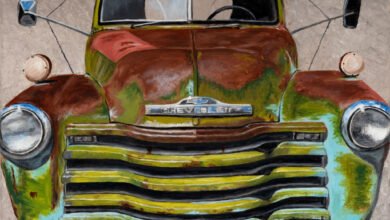
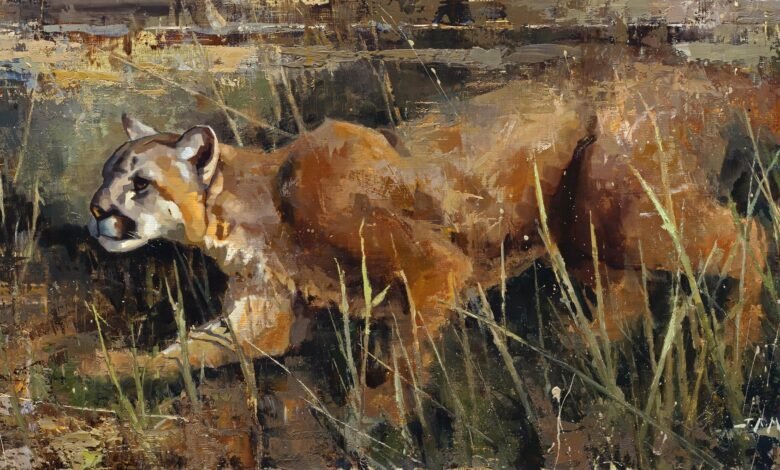
Jerry’s artistic approach centers on a balance between control and spontaneity, between accurate drawing and expressive paint handling. He starts paintings loose and somewhat abstract, allowing the picture to evolve rather than following a rigid predetermined plan. “Trying not to get too bossy with the paint,” he describes it, “allowing it room to move while pulling out the form of the whole.”
This methodology requires both technical confidence and philosophical commitment. You must understand drawing well enough to capture accurate form quickly, without overworking. You must trust that loose brushwork and palette knife application will coalesce into coherent images. And you must resist the temptation to tighten up, to add just one more detail, to make everything explicit.
“I feel this helps keep the painting from getting too tight or content-driven,” Jerry explains. “I have found paintings like this more interesting to view, so I try to paint that way. It is a challenge to keep it loose while remaining accurate without getting too tight in the process, but I am learning. It is the struggle to balance form and content.”
The phrase “but I am learning” is telling. After 20 years of full-time painting, Jerry still positions himself as a student rather than a master, continually evolving his approach, challenging himself with new subject matter, experimenting with composition, lighting, color palettes, and paint application techniques.
Source link