Western sanctions failed so completely that Russia just pitched Washington $12 trillion

(function(w,q){w[q]=w[q]||[];w[q].push([“_mgc.load”])})(window,”_mgq”);
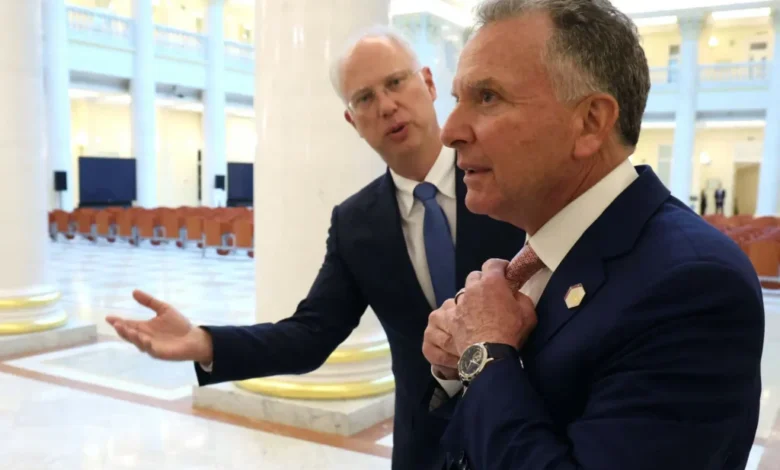
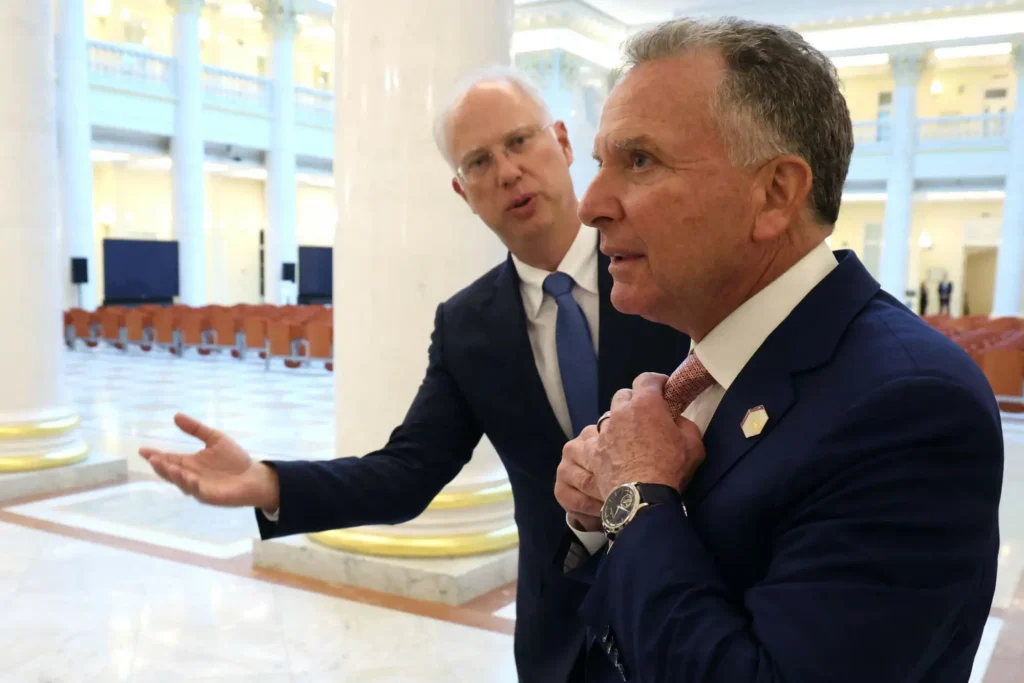
Russia has offered the United States a $12 trillion economic partnership. The “Dmitriev package,” named after Kremlin envoy Kirill Dmitriev, proposes joint oil and gas ventures, rare earth mining, American aircraft contracts to modernize Russia’s fleet, nuclear energy cooperation, and the restoration of dollar-based settlements—for a country that has spent years preaching de-dollarization and waging a war of conquest in Europe.
Dmitriev can make this audacious pitch because four years of Western inaction taught him he could. The sanctions promised in 2022 were never fully enforced. The companies that were supposed to leave mostly stayed. And Russia drew the obvious conclusion: if the West has been funding our war quietly for four years, it’s time to put that arrangement on paper.
The broken promise
After Russia’s full-scale invasion, the West announced the most sweeping sanctions in history. Companies touted their support for Ukraine and promised to leave the Russian market.
We co-founded B4Ukraine to track whether that promise was kept. It was not. Though 1,904 foreign companies have withdrawn or scaled back, 2,373 remain active in Russia. Those that stayed generated an estimated $20 billion in Russian tax revenue in 2024—enough to pay the salaries of one million Russian soldiers.
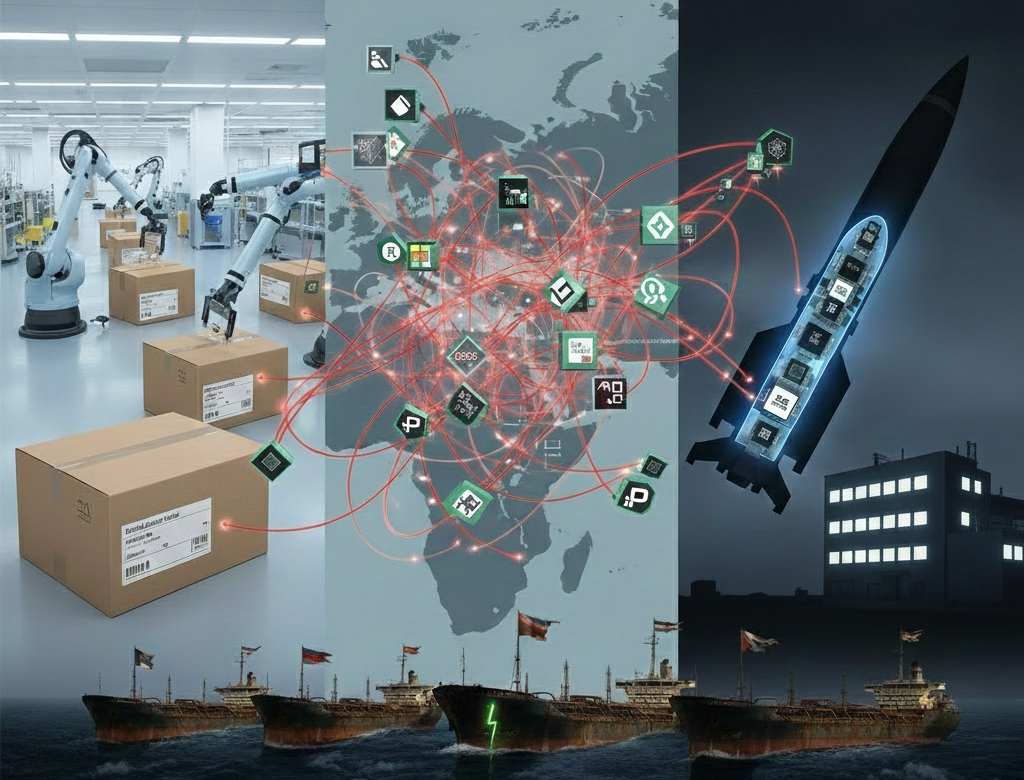
Russia’s war economy is not running on Russian ingenuity. It is running on three Western lifelines that were never cut.
1. Western oil money pays for Russian missiles
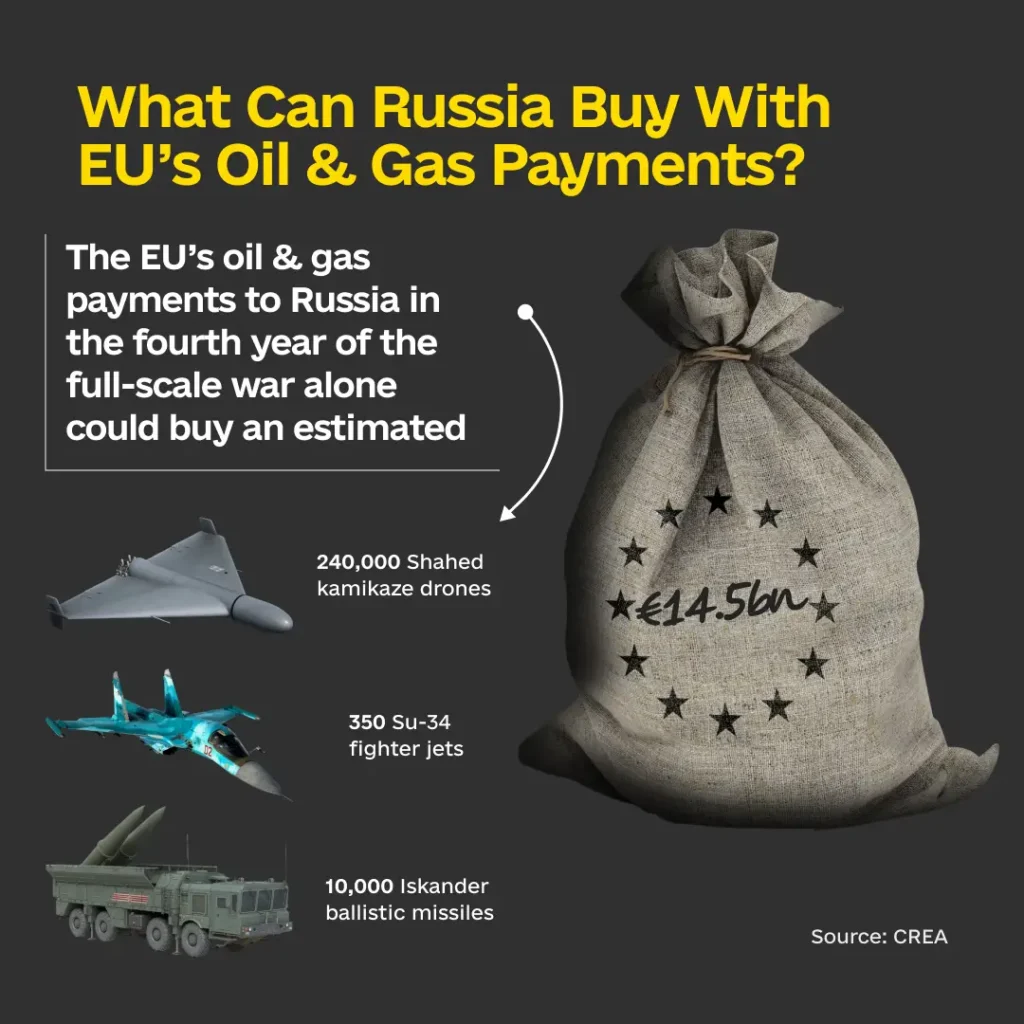
The new EU/UK price cap, which took effect on 1 February, set the limit at $44 per barrel. In January 2026, Russia’s Urals crude oil sold at an average of $54.2—more than $10 above the cap. 68% of Russian crude exports were carried by sanctioned shadow vessels; 24% of them were transported by G7 tankers. False flagging has become a major evasion tool.
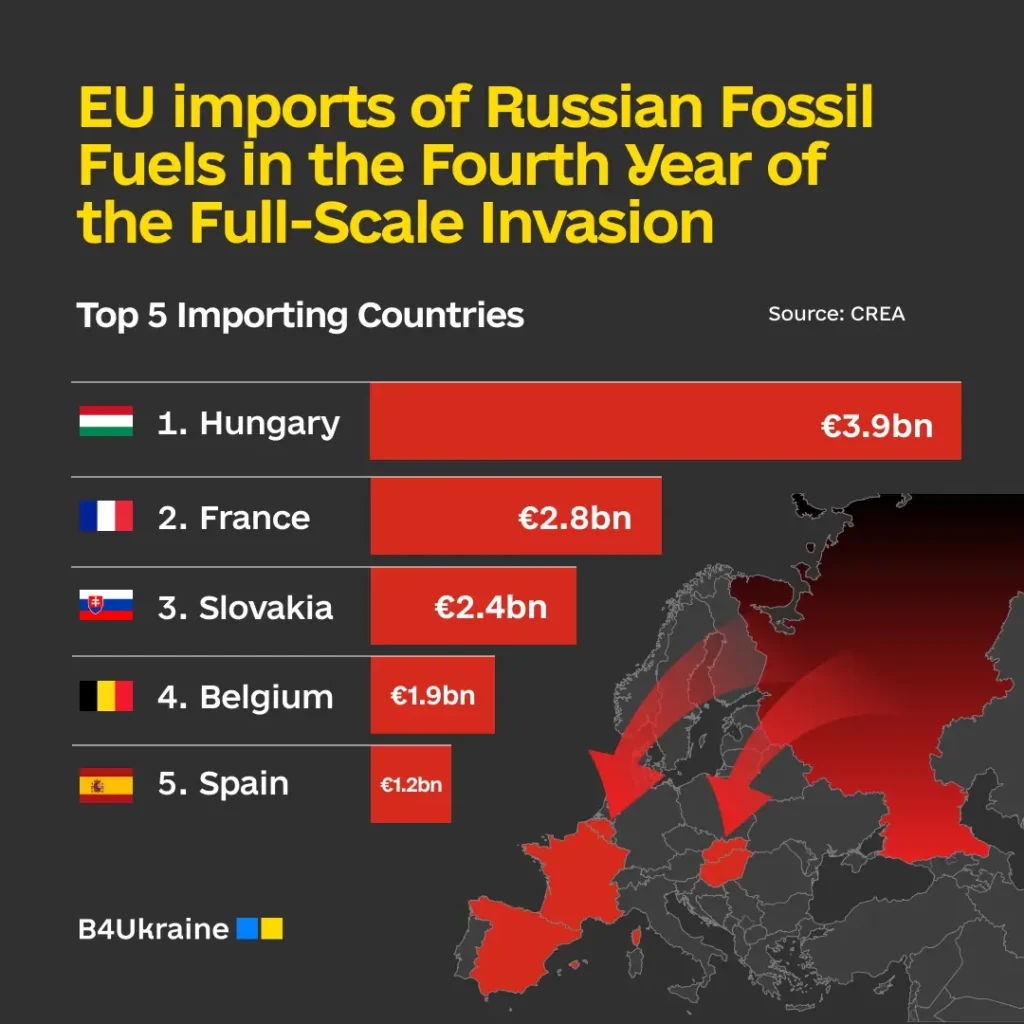
In the fourth year of the all-out war, Russia earned €193 billion from fossil fuel exports—only 27% below pre-invasion levels. Russian LNG exports to the EU declined by just 9%, with France, Belgium, Spain, and the Netherlands as the largest importers.
Every cargo that docks in a European port finances another day of Russian shelling.
2. Western banks still process Russian money
Eleven Western banks were still turning profits in Russia in 2025. Austria’s Raiffeisen Bank International is the most notorious: RBI handles roughly half of all international payments between Russia and the rest of the world.
The bank has reportedly maintained ties with Russian military suppliers and sanctioned state entities, and operates payment infrastructure that keeps Russian gas flowing into Europe.
Evasion networks operate through Kazakhstan, Kyrgyzstan, and Uzbekistan—all three, along with Georgia and Armenia, have received warnings from the US over their role in sanctions circumvention. Enforcement actions remain rare enough to be irrelevant.
3. Western chips still fly in Russian weapons
On 7 September 2025, a Russian 9M727 Iskander missile struck the building of Ukraine’s government. Analysis of a similar recently recovered Iskander revealed that it contains roughly 35 components of US origin, alongside parts from Japan, Britain, and Switzerland.
The manufacturers include Texas Instruments, Analog Devices, and Altera (USA); College Electronics Ltd (UK); Fujitsu (Japan); and Traco Power (Switzerland).
Western electronics reach Russia primarily through intermediaries in Hong Kong and mainland China: according to Russian customs data, 55 Hong Kong companies exported over $55 million worth of dual-use goods to Russia between 2024 and February 2025.
Russia is asking to formalize what already exists
Joint oil and gas ventures—while Russian crude already sells above the price cap on shadow tankers. Dollar-based settlements—while an Austrian bank already handles half of Moscow’s international payments. Technology and AI partnerships—while American-made chips already fly in Russian missiles, routed through Hong Kong. Preferential return of Western companies—while 2,373 of them never left.
The Dmitriev package is not a provocation. It is a bet—that Western greed, having quietly funded Russia’s war for four years, is ready to do so openly.
The lifelines must be cut
The conversation in Washington has it backwards. The question isn’t whether to start new economic ties with Russia. It’s why the existing ones haven’t been severed.
The 2,373 companies still in Russia must leave. Close the price cap loopholes. Sanction the shadow fleet. Shut down the evasion networks. Impose real penalties on jurisdictions that facilitate circumvention.
And any peace process must include Ukraine as an equal partner—not as a topic discussed between Washington and Moscow over Ukraine’s head. A peace imposed through coercion is not peace. It is deferred conflict.
None of this requires new legal frameworks. It requires political will to enforce the ones that already exist.
The incoherence must end
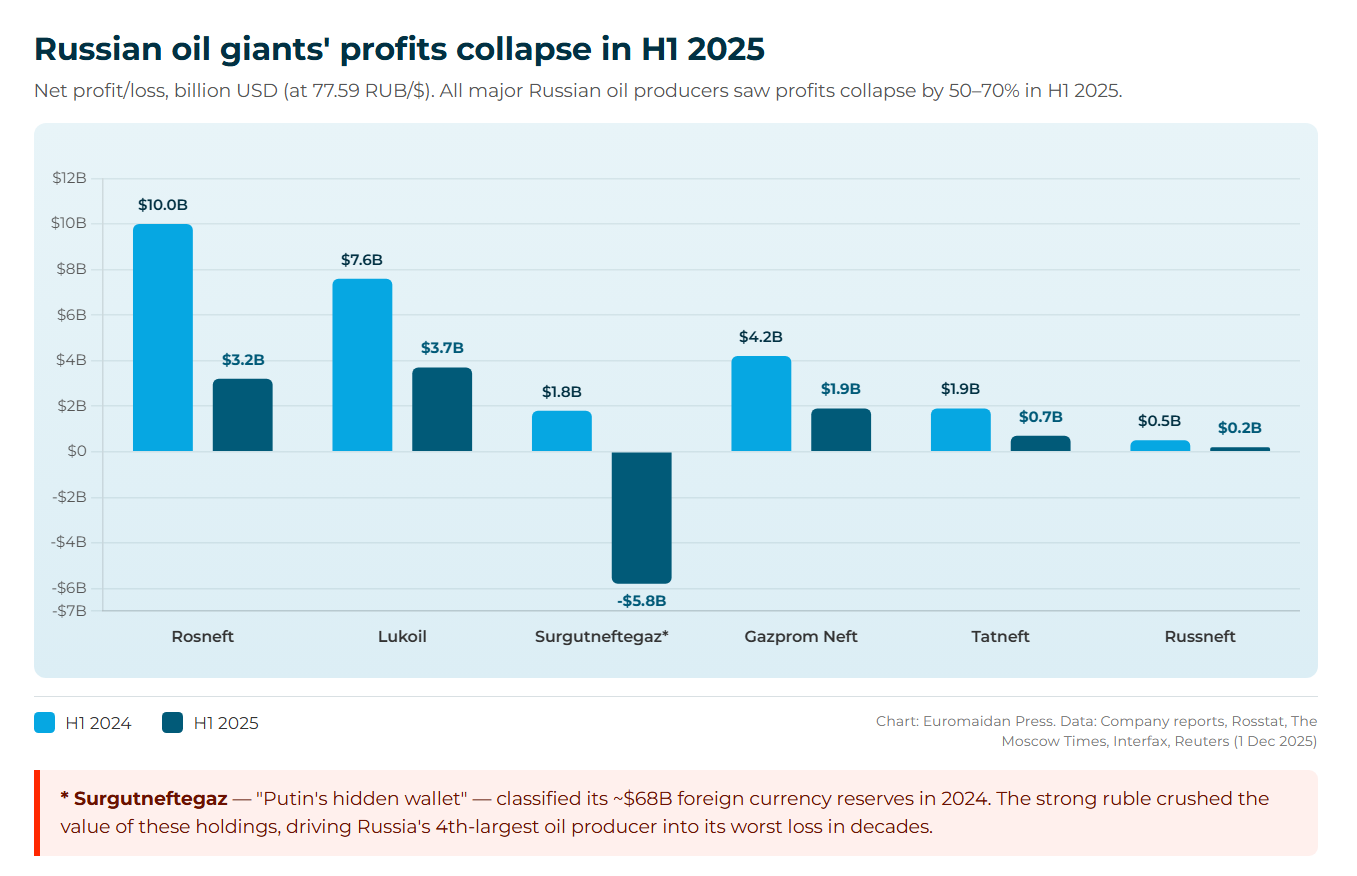
Russia’s war economy is brittle. It should have buckled years ago. The only reason it hasn’t is that the West keeps paying to prop it up.
Now Moscow is pitching a $12 trillion partnership to the country that sanctioned it. The same country whose chips fly in Russian missiles. The same country arming Ukraine to fight the war that Western money is funding. That is not a business proposition. It is a test of whether the West meant anything it said four years ago.
We track the answer every day. So far, it is no.


Editor’s note. The opinions expressed in our Opinion section belong to their authors. Euromaidan Press’ editorial team may or may not share them.
Submit an opinion to Euromaidan Press
(function(w,q){w[q]=w[q]||[];w[q].push([“_mgc.load”])})(window,”_mgq”);
Source link