Russia rushed reinforcements to its fracturing southeast. They rode in unarmored and in broad daylight

(function(w,q){w[q]=w[q]||[];w[q].push([“_mgc.load”])})(window,”_mgq”);
- In early February, Russian communications melted down
- Ukrainian troops sensed opportunity—and attacked
- The Ukrainian counteroffensive has slowed as Russian reinforcements arrive
- But Russian losses are heavy
Two weeks into Ukraine’s southeastern counteroffensive, Ukrainian forces are still advancing from the west and north, squeezing one key Russian field army.
Ukrainian casualties have increased as the Russians rush reinforcements and firepower toward their fracturing southeastern positions. But frantic Russians are sloppy Russians—so Russian casualties have spiked, too.
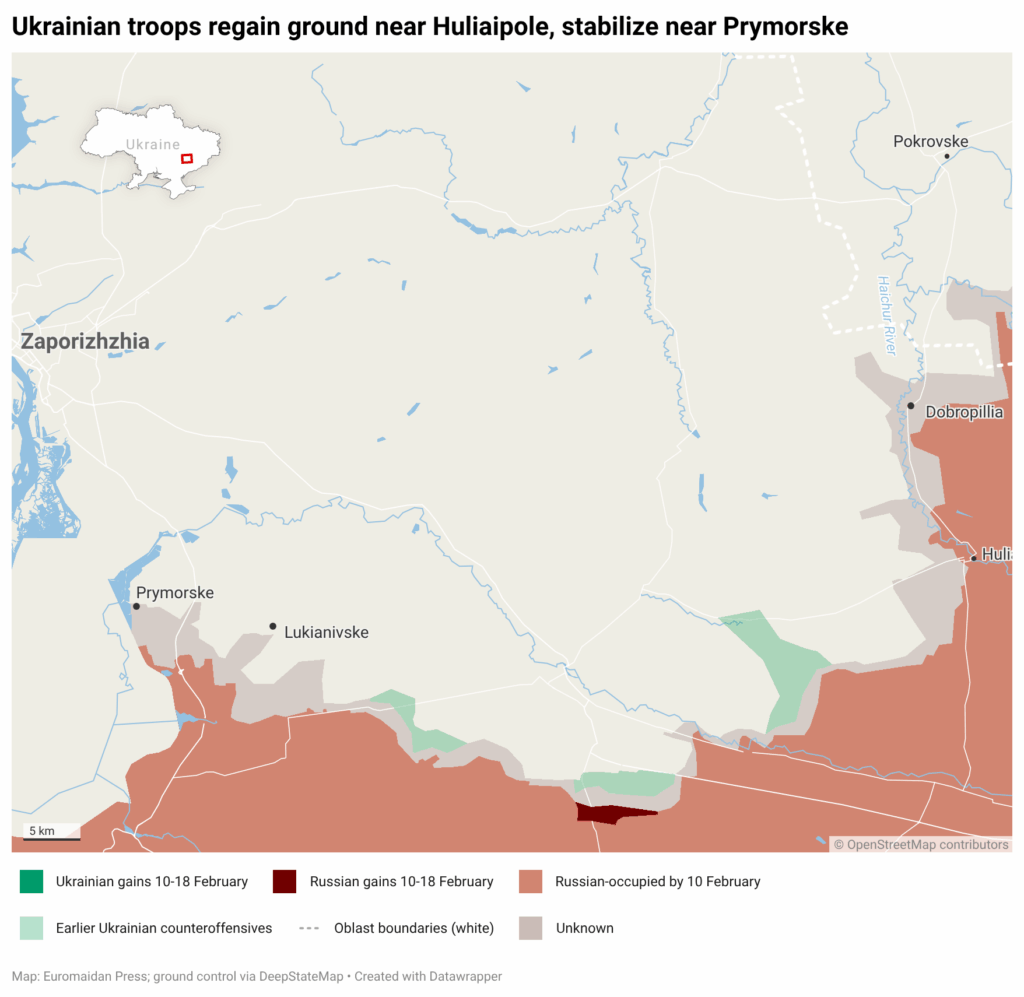
Consider one particularly bloody recent skirmish around the village of Dobropillia, which anchors the western edge of the Russian 36th Combined Arms Army’s positions straddling Dnipropetrovsk and Zaporizhzhia Oblasts in the southeast.
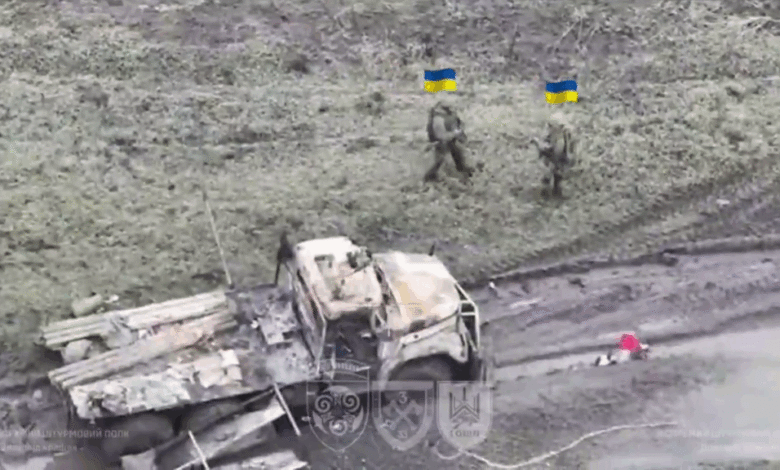
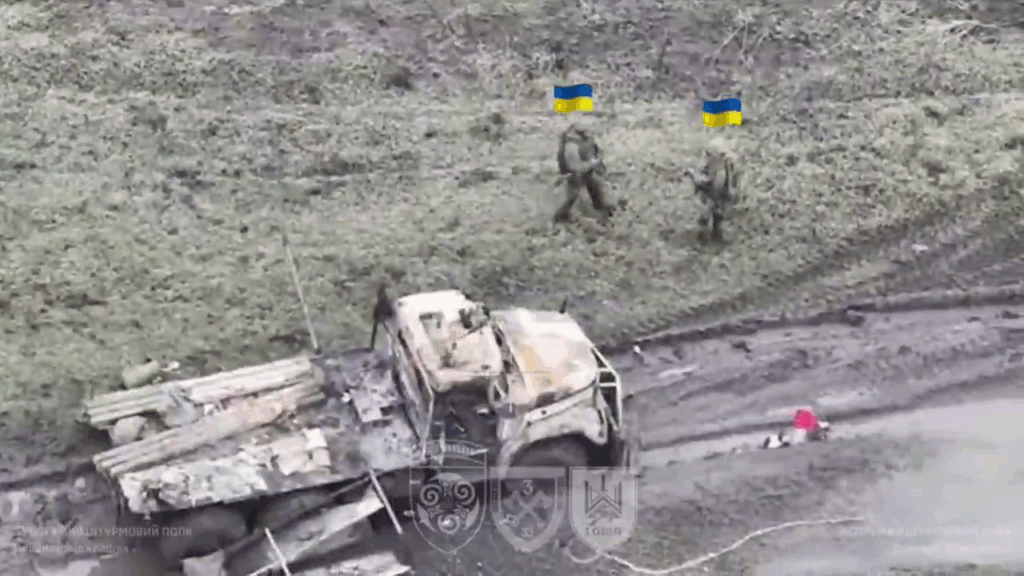
As many as 15 Russian were killed or wounded when they unwisely piled into a single unarmored truck and rolled along the T0401 highway just north of Dobropillia in broad daylight on or just before Wednesday. (See the video below.)
The truck and its passengers were easy targets for a powerful Ukrainian battlegroup that has been steadily advancing in the area ever since Russian forces suffered a command and control meltdown early this month.
At the behest of the Ukrainian government, billionaire Elon Musk’s Starlink satellite communications firm bricked Russia’s stolen and smuggled SATCOM terminals, effectively muting many Russian headquarters and blinding many Russian drones starting in early February.
Meanwhile, the Kremlin cut off military access to non-government social media such as the popular Telegram app, which Russian troops used to communicate along the front.
Chaotic command and control
The twin moves sowed chaos in the Russian armed forces in Ukraine. It became much more difficult for the Russians to surveil and attack from the air and coordinate assaults from the ground. Sensing a rare opportunity, the Ukrainians attacked at the moment of peak confusion on the Russian side.
A battlegroup drawn from several Ukrainian assault units attacked the western flank of the Russian 36th Combined Arms Army, whose four regiments and brigades had been steadily marching toward Zaporizhzhia City, 75 km to the west.
First, the Ukrainians cleared out Russian troops from the wide “gray zone” between Russian and Ukrainian lines. Next, they penetrated the Russian line itself around Dobropillia. Panicking, the Russians “committed a significant number of reserve units to the fight and also launched counterattacks” south of Dobropillia, according to observer Thorkill.
It’s unclear whether that truckload of Russians near the T0401 was part of the reinforcing reserve force. In any event, it suffered catastrophic defeat. First, a Ukrainian first-person-view drone stuck the unprotected truck, immobilizing it and scattering its 15 occupants.

Ukrainian artillery rained down on the fleeing Russians. When a Ukrainian infantry team arrived to mop up, they found only dead Russians and parts of dead Russians.
Faltering on the ground in the southeast, the Russians are trying to blunt the Ukrainian counteroffensive from the air. Their satellite-guided drones still largely scrambled, the Russians have brought in more artillery and more teams from the elite Rubicon (also spelled Rubikon) Center drone unit, which is famous for its unjammable fiber-optic drones. More Russian air force fighters are dropping more precision glide bombs on attacking Ukrainian troops.
“Russian forces have significantly intensified their artillery, drone and glide-bomb strikes on Ukrainian assault groups, resulting in a sharp rise in casualties,” AMK Mapping reported.
But Russian casualties are heavy, too, as that truckload of Russians could attest—if any survived.
(function(w,q){w[q]=w[q]||[];w[q].push([“_mgc.load”])})(window,”_mgq”);
Source link