(RNS) — Convicted sex offender Jeffrey Epstein purchased sacred cloth that once covered the Kaaba, according to newly released files that include emails detailing a shipment of three framed pieces from Mecca to Florida.
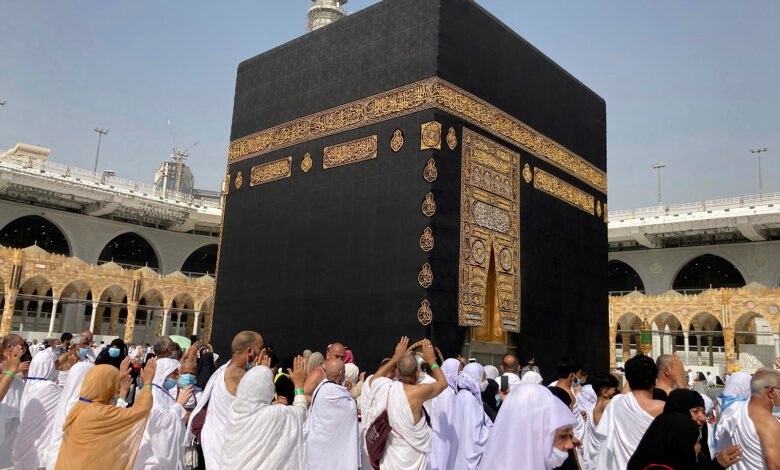
The Kaaba Kiswah — or the black, gold-embroidered cloth that shrouds Islam’s holiest site in Saudi Arabia — is a revered artifact that carries spiritual meaning for Muslims worldwide.
The emails, included in the latest tranche of Epstein files unsealed Friday (Jan. 30) as part of the Epstein Files Transparency Act, show United Arab Emirates-based businesswoman Aziza al-Ahmadi working with a man named Abdullah al-Maari to organize the Kiswah shipment between February and March 2017.
“By the way the black piece was touched by minimum 10 million Muslims of different denominations, Sunni, Shia and others,” al-Ahmadi wrote to Epstein on March 22, 2017, nearly a decade after he first served time for sex crimes and two years before he was again arrested on federal charges of sex trafficking in July 2019.
The correspondence listed three pieces with pictures of the cloths and short explanations: one from inside the Kaaba, one from the exterior covering and a third cover that had not been used. The pieces were classified as “artworks” and transported via British Airways Air Cargo, the emails show.
It is unclear why Epstein was interested in the Kiswah or how he used the cloth pieces when they arrived at his private island in the U.S. Virgin Islands.

Saudi workers embroider Islamic calligraphy, using either pure silver thread or gold-plated silver thread, during the final stages in the preparation of a drape, or Kiswah, that covers the Kaaba, the cube-shaped structure at the heart of the Grand Mosque, at the Kiswah factory in Mecca, Saudi Arabia, June 3, 2025. (AP Photo/Amr Nabil)
Here are 3 things to know about the Kaaba and its decorative cover:
1. The Kaaba was a holy site prior to Islam.
Kaaba, meaning cube in Arabic, is considered by Muslims to be the “house of God” on Earth. Muslims believe it was built by the Prophet Ibrahim (known as Abraham in the Jewish tradition) and his son Ismail (Ishmael) as a house for monotheistic worship thousands of years ago.
The Kaaba retained its sacred status over the years. Before Islam was founded, the Kaaba housed idols and attracted a range of worshippers from Arab tribes across the Arabian Peninsula who visited for an annual pilgrimage.
The Kaaba became the focal point for Muslim worship and pilgrimage when the Prophet Muhammad and his Muslim followers returned to Mecca after exile, according to Islamic tradition.
All Muslims aspire to make the annual pilgrimage, or Hajj, to the Kaaba once in their life if they are physically and financially able. Prayer five times a day toward the direction of the Kaaba and the pilgrimage are two of the five pillars of Islam.

A Saudi man embroiders Islamic calligraphy, using either pure silver threads or silver threads plated with gold, during the final stages in the preparation of a drape, or Kiswah, that covers the Kaaba, the cube-shaped structure at the heart of the Grand Mosque, at the Kiswah factory in Mecca, Saudi Arabia, June 13, 2024. (AP Photo/Rafiq Maqbool)
2. The Kiswah cover is designed by highly trained craftsmen.
The creation of a new Kiswah every year is a complex operation that involves more than 200 fabric artisans, 264 pounds of silver and gold thread, and 47 pieces of silk imported from Italy, according to Islamic art blog Bayt Al Fann.
Production of the sacred cloth took place in Egypt for centuries but was relocated to Saudi Arabia in the 20th century. The process involves weaving, dyeing printing designs and embroidering with silver and gold thread. The Kiswah, which covers over 7,000 square feet and is assembled from 47 panels, costs about $4.5 million to make.
The color of the Kiswah used to be white during the Prophet Muhammad’s life, but it changed colors over time to red, then green and as of today, black, according to Bayt Al Fann.
3. The Kaaba gets a new cover every year.
Since Prophet Muhammad’s time, the cloth has been removed from the Kaaba and replaced with a new one each year around the start of the pilgrimage.
The old cloth, sometimes weighing 3,000 pounds, is treated as a highly valuable artifact. It is cut and gifted to museums, dignitaries and Muslim countries, according to the Kiswah Islamic Store. The online retailer, which sells the Kiswah cover, says the cloth is also sometimes made available “to collectors or for purchase by verified merchants.”
Muslims consider the Kaaba a symbol of the oneness of God and the replacement of the artistic cover every year represents a renewal of faith.
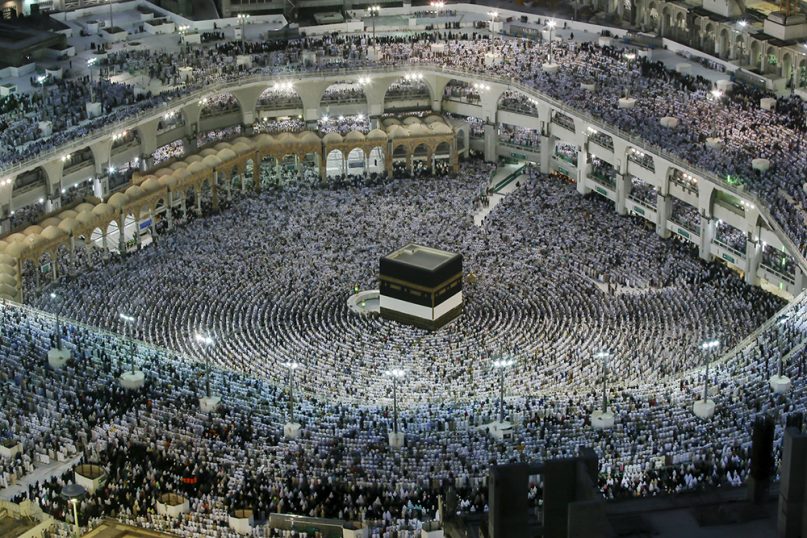
Muslim pilgrims pray around the Kaaba at the Grand Mosque, ahead of the annual Hajj pilgrimage in the Muslim holy city of Mecca, Saudi Arabia, on Aug. 16, 2018. (AP Photo/Dar Yasin)
Source link