(function(w,q){w[q]=w[q]||[];w[q].push([“_mgc.load”])})(window,”_mgq”);
This interview is part of our series Inside the waiting room, which examines the structural, political, and domestic barriers to Ukraine’s EU membership—and the cost of failing to overcome them. Read the previous part: Why Ukraine’s EU membership is stuck—and it’s not just Zelenskyy
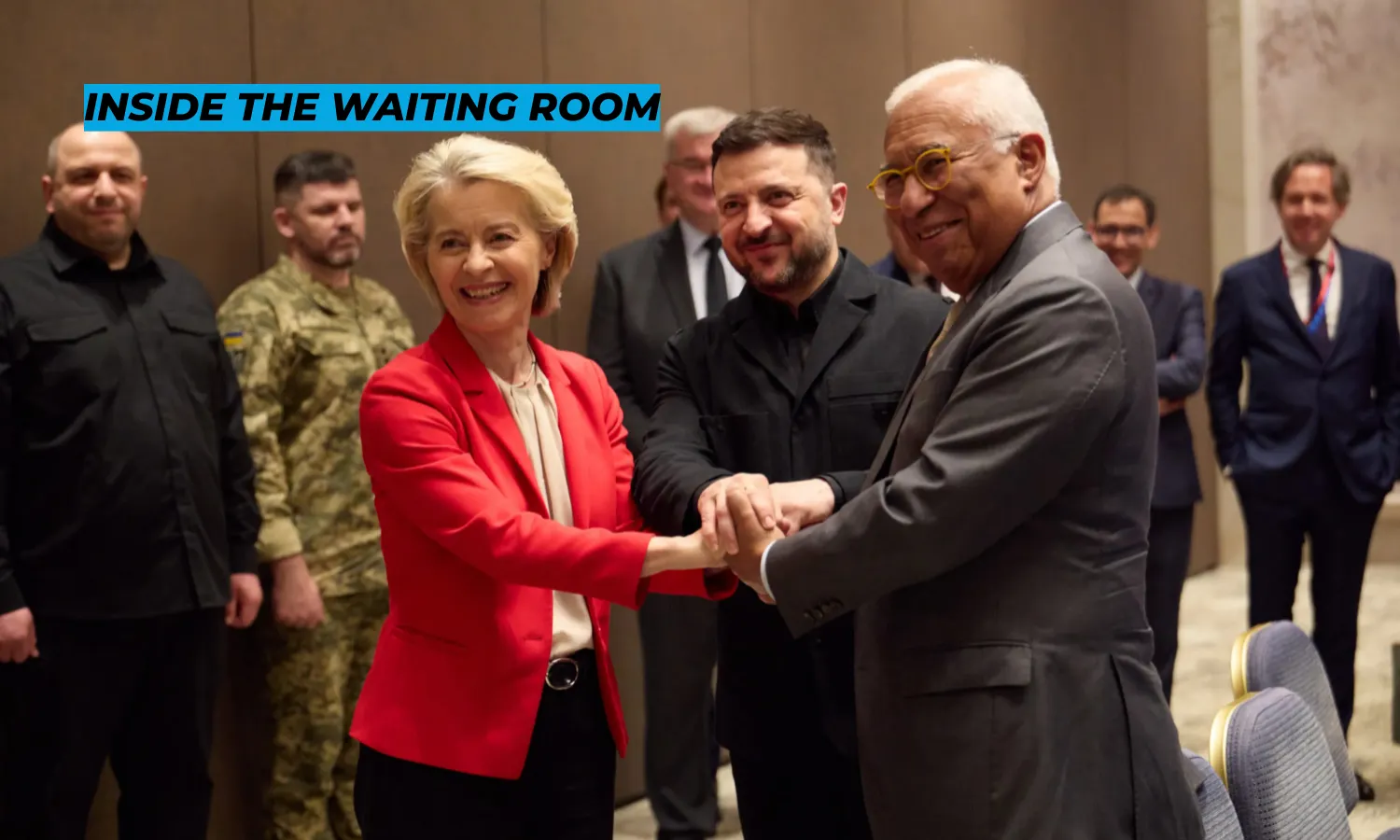
The story making the rounds in Brussels is that Volodymyr Zelenskyy doesn’t understand how EU enlargement works. Seven officials told the Financial Times the Ukrainian president was too stubborn to accept that membership isn’t a gift. “We are the only friends he has, so he might be better off keeping his mouth shut,” one said.
The view from inside the European Parliament is more complicated.
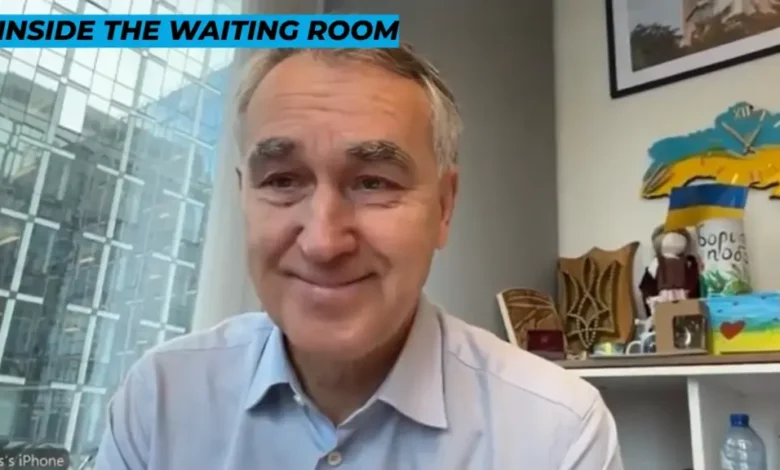
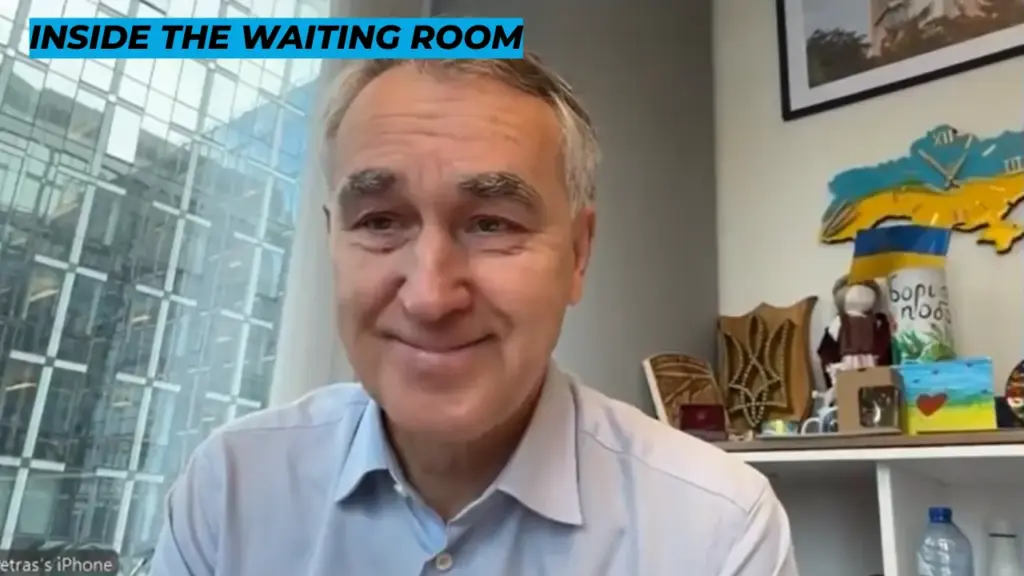
Petras Auštrevičius has been one of Ukraine’s strongest voices in Brussels since 2014. As a Lithuanian MEP and member of the EU–Ukraine Parliamentary Association Committee, he sees both the political theatre and the procedural machinery. He brings something rarer still: in the early 2000s, he served as Lithuania’s chief negotiator for its own EU accession. He has sat on Ukraine’s side of the table.
Speaking with Euromaidan Press, Auštrevičius offered a candid assessment. The 2027 fast-track target is unrealistic. Nothing is on paper. Enlargement isn’t in the EU’s top three priorities. But the political will is genuine, and Ukraine’s accession is a question of when, not if.
“I don’t believe in fast-track membership by 2027”
EP: Ukraine has moved faster towards EU membership than any candidate in history—and it may not be fast enough. There’s a sense in Kyiv that European solidarity is finite, that the political window closes after the 2029 European Parliament elections. Is that frame justified?
I wouldn’t say the window of opportunity is closing by 2029. Definitely there will be a new political reality—new European Parliament, new EU institutions, new political tendencies. We see more populism now, more right and left marginals coming up on the European stage. But I’m still very optimistic about the centre-based forces remaining in charge.
Of course, we have to do as much as we can by that time. But I don’t see a tragedy in completing certain processes after.
Negotiations first, membership later. That’s the common logic. That’s why I’m not convinced these negotiations can be completed in such a short period—as the indication was for membership in 2027. It was a bit of a shock for certain member states. The traditional sequence is negotiations, preparations, pre-accession, then accession. To present this formula in reverse—for politicians and executives in many European capitals, this was the wrong order.
We’ve been presented with the concept of reverse integration in the Foreign Affairs Committee. And that’s it. It’s not enough. It takes more time to go line after line, to clarify certain issues.
A major obstacle is not only political but procedural. Today’s politicians have no experience of accession. Present-day accession needs procedures in place. So I’m not in fire-situation mode. Calm down. We have to talk. We have to clarify many issues and find—probably and hopefully—an optimal model for present EU enlargement.
“Membership is certain—the question is what kind”
EP: Because of the geopolitical situation and the Russian threat, can we be confident Ukraine will become an EU member?
Definitely. We have signed ourselves up for Ukraine’s future. We’ve repeated it many times in our resolutions, in our political statements.
I have no doubt about this. My question is only: when, under what conditions, and will it be a twisted membership? I don’t wish to see Ukraine being a second-class member of the European Union. It would be difficult for Ukraine—and for many politicians in Europe—to see it.
EP: Is second-class membership actually on the table?
In the discussions, I’ve sensed this kind of possibility—with no voting rights, for example, on certain issues, or generally. But to accept second-class membership: you never know when it will end. Sometimes it becomes a decision for longer periods of time.
Let’s not present anything as a final agreement. We’re discussing theoretical situations. And I can tell you: nothing is ready. Nothing is on paper. Nothing is on the table.
It’s an ongoing discussion, a search for the best—hopefully balanced, realistic, effective—strategy for accession. But we really need a strategy. And we have to sell it politically to member states and to the political forces in Europe.
“Nothing is ready. Nothing is on paper. Nothing is on the table.”
MEP Petras Auštrevičius
Why the 2027 rush exists anyway
EP: If you don’t see 2029 as a hard deadline, why is there so much pressure to settle Ukraine’s membership by 2027? When I spoke with Leonid Litra, who created the “Membership by Design” concept, he framed it as wanting something definite for Ukraine before any peace deal with Russia is signed—as a security guarantee. What other reasons do you see?
First, stopping the fighting and reaching a peace agreement takes time. Nobody knows the timing. Of course, it should be reached as soon as possible.
But of the eight months we have in 2026—with summer break, Christmas break and so on—maybe six months are left for real day-to-day business in Brussels. What can you achieve in six months?
One thing: the start of negotiations. With a peace deal, the EU should come up with the start of negotiations. That would be a very solid political signal in support of Ukraine’s EU membership—and a signal to third countries, particularly the United States, to accept Ukraine as a full-fledged member.
A peace deal and lasting security in Ukraine in 2026 must be supported by a political decision of the European Union to start negotiations. Then we go into 2027 with serious negotiations being concluded.
EU membership is part of Ukraine’s security guarantee—growing in importance as it emerges. But I hardly imagine it happening at one time in 2027.
How Brussels has changed since 2022
EP: You’ve been in the European Parliament for a long time. There was a period of euphoria in 2022—everyone rushed to grant Ukraine candidate status. Now there are signs of enlargement fatigue. How has the dialogue changed?
I have to admit openly: enlargement is not a dominating agenda. Security, competitiveness, the Green Deal—these dominate. Enlargement is present, but it’s not in the top three.
For some countries in Central and Eastern Europe—exposed countries—they still have a relatively fresh memory of 20 years of membership. They’re more sensitive to the issue. But overall, Ukraine occupies a special place because of security. Enlargement as such, not so much. We have to merge those two issues into one and translate them into something practical.
I think this is a bit stuck. The negative experience from the Western Balkans doesn’t help. Countries go forth and back with no definite results. Many member states look at Bosnia and Herzegovina. Some countries proceed much better, like Montenegro.
A very special case is Serbia. Serbia’s alignment with the EU’s foreign and security policy—so important now—is missing. Serbia is not willing to support important actions because of its special relationship with Russia. So one more troublemaker is part of the overall discussion.
My point is: we are moving forward with enlargement, but there are arguments against. If you talk to many politicians here in the European Parliament, the top of our agenda is convincing ourselves that countries are ready, that we have a strategy—so let’s strike a deal.
“Read it from the eyes of Ukrainians”
EP: Final reflections?
In the Western Balkans, I see uncertainty—no motivation, no political push, no political will. Hardships for a long period.
In the eyes of those I’m in constant contact with from Ukraine, I see the opposite: a lot of positive motivation, for the sake of those in the trenches. Those people, once back in civilian life, will bring a strong commitment for Ukraine to be an absolutely different country.
We have to read this from the eyes of Ukrainians. We have to understand it. And we have to push ourselves not to delay the response and the necessary decisions.
We are in an absolutely different position—much stronger, with the flame coming from Ukrainians’ hearts, more from the western part of Ukraine. I see a lot of positive things coming from Ukraine, including on security.
We have no historical chance to lose this game. We have to be together with Ukraine as one unit. Politics are very fluid—they can change overnight. But how things started, what is going on, what threats we are still facing—together, we have the same direction.
— Slava Ukraini.
— Heroyam slava.
(function(w,q){w[q]=w[q]||[];w[q].push([“_mgc.load”])})(window,”_mgq”);
Source link