Ukraine’s deep-strike drone program has one bottleneck: tiny jet engine made by three European companies

(function(w,q){w[q]=w[q]||[];w[q].push([“_mgc.load”])})(window,”_mgq”);
Europe is ramping up the production of mini jet engines to boost Ukraine’s deep-strike drone capability. Mini-turbojet drones are emerging as a new strategic tool, allowing Ukraine to compete with Russia’s advanced deep-strike systems, Reuters reports.
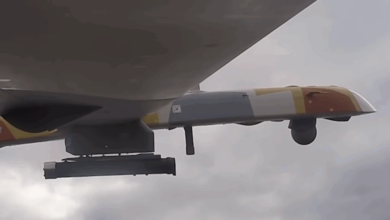
Drones powered by mini-turbojets are faster than propeller-driven models and significantly cheaper than cruise missiles.
This enables Ukraine to conduct precision strikes in the enemy’s rear, competing with advanced Russian systems such as the Geran-5.
“Europe has a massive bottleneck in mini-jet engine production,” said Fabian Hoffmann, senior research fellow at the Norwegian Defense University College.
Engines as critical link: shortages threaten Ukraine’s drone program
Sources within Ukraine’s defense industry note that the scarcity of mini-engines limits drone production, posing a significant bottleneck for the country’s missile program.
There is a shortage of turbojet engines for drones, as well as the materials needed for their production, Maria Popova, COO of the Ukrainian Defense Industry Council, confirmed.
According to European officials and internal documents, Russia imports some engines from China, while Ukraine relies on a small group of European suppliers, including PBS, the German company JetCat, and the Dutch company Destinus.
ZofiTech reportedly supplies nearly all of the roughly 200 engines produced each month, with demand expected to reach thousands in the coming months.
From labs to battlefield: Ukraine works on domestic engines
Several Ukrainian drone manufacturers are developing their own engines to reduce reliance on foreign suppliers, but production volumes remain limited. Engineers are also testing a low-cost Grim-17 pulsejet engine for interceptor drones, unveiled in December last year.
However, Estonian defense investor Ragnar Sass notes that these domestic efforts are still “a drop in the ocean” compared to Ukraine’s needs.
(function(w,q){w[q]=w[q]||[];w[q].push([“_mgc.load”])})(window,”_mgq”);
Source link