FPV drones get all the attention. Ukraine’s reusable heavy bombers are doing the real killing


(function(w,q){w[q]=w[q]||[];w[q].push([“_mgc.load”])})(window,”_mgq”);
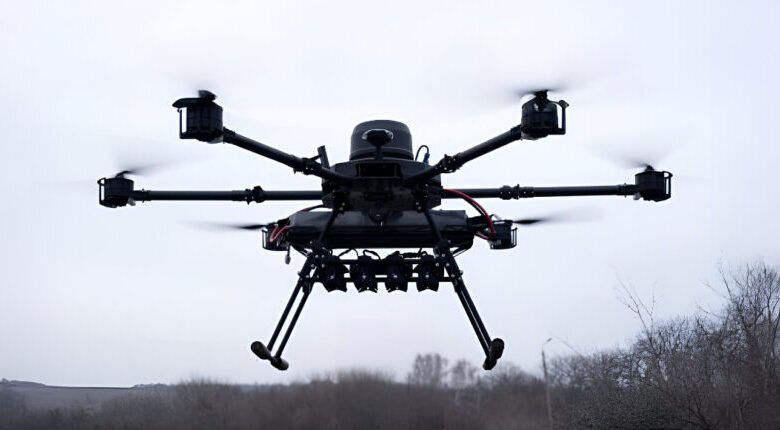
Explosive first-person-view drones get a lot of the attention, but the most dangerous drones in the sky over Ukraine—especially for the Russians—are heavy bomber drones.
Where an FPV explodes on contact, making it single-use, a heavy bomber drone is reusable. It can strike repeatedly with a payload of several grenades and then return to base for more munitions.
The devastation bomber drones can inflict is evident in a video montage posted by the Ukrainian army’s 42nd Mechanized Brigade, defending around the village of Novopavlivka in eastern Ukraine’s Zaporizhzhia Oblast.
The montage depicts multiple lethal bombings of scattered Russian infantry, but the final shot in the montage is most telling. We see what the bomber drone sees as it hovers over a clutch of Russian vehicles disgorging an entire platoon of around 25 infantry under the cover of darkness.
The thermal-camera-equipped bomber strikes while the infantry are most vulnerable—when they’re outside of their vehicles but still packed into tight groups. Dropping two grenades in quick succession, the bomber evidently kills several Russians.
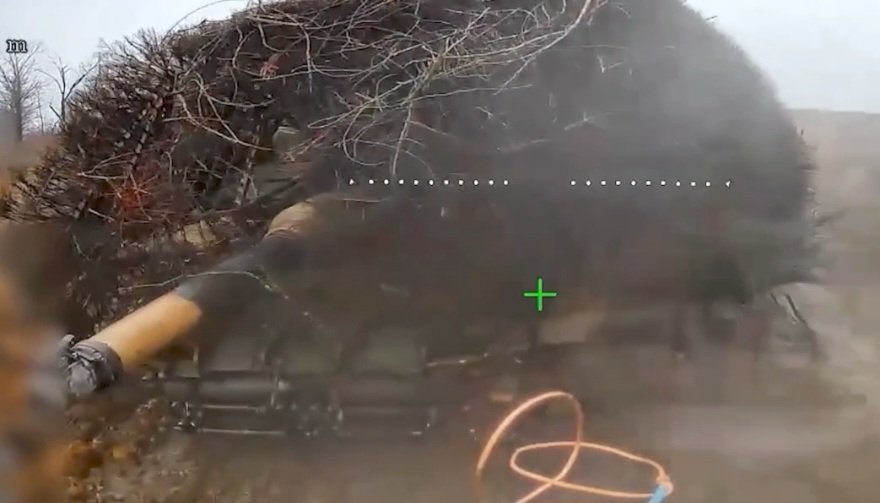
“Night bombers are out hunting and turning enemy infantry into mincemeat!” the 42nd Mechanized Brigade crowed.
The video hints at another advantage of bomber drones over exploding FPVs. A drone operator sees what an FPV sees only until the moment the drone explodes. By contrast, a bomber drone can linger after striking, observing any damage it inflicted.
An operator might not immediately know if an FPV narrowly misses its targets. It would take follow-up reconnaissance by another drone to confirm damage or absence of damage. On the other hand, a bomber conducts its own battle damage assessment, helping a unit decide whether to send out more drones for further strikes.
Ukraine’s persistent drone edge
As Russia’s wider war on Ukraine grinds into its 48th month, the Russian military is erasing the Ukrainian military’s unmanned edge in certain classes of technology. Russian FPVs are as numerous and deadly as Ukrainian FPVs are directly over the front line. And in the deep logistical zone as far as 200 km from the front, elite Russian drone units such as the Rubicon (also spelled Rubikon) Center, which operate medium-range FPVs, might actually have a slight edge over their rival Ukrainian drone units.
But when it comes to bomber drones, Ukraine dominates. Ukrainian firms have massively scaled up production of eight-rotor octocopters and six-rotor hexacopters, each of which generally packs three or four grenades as well as day and night cameras and redundant command and video relay systems.
Ukrainian company SkyFall is typical of the private enterprises behind the Ukrainians’ bomber drone fleet. Skyfall produces 100,000 bomber drones a year at a unit cost of $8,500.
That’s 16 times the cost of a typical FPV, but the bomber is actually cheaper per mission and payload.
An FPV normally flies once and explodes with the force of one grenade. A bomber may complete a dozen sorties, and drop four grenades per sortie, before crashing or getting shot down.

SkyFall evolves its bombers at a rapid pace in order to stay ahead of Russian countermeasures. When the Russians began jamming GPS-guided bombers, Skyfall added unjammable inertial and terrain-matching navigation.
When the Russians started downing the bombers with small air-to-air FPVs, Skyfall added a defensive flash. Countermeasures to Russian interceptors include EW jamming and a blinding flash. When a bomber detects an approaching interceptor, it triggers the flash. “The FPV video camera is temporarily blinded, and the operator loses track of the target,” Canadian drone expert Roy explained.
With Russia having fully pivoted from mechanized assaults to infantry assaults, it’s more urgent than ever for Ukraine to kill as many Russians as possible, as quickly as possible. FPVs may capture satisfying imagery of Russians in the instant before they’re struck, but the lingering bombers with their heavier payloads are killing faster and more efficiently.
(function(w,q){w[q]=w[q]||[];w[q].push([“_mgc.load”])})(window,”_mgq”);
Source link