TikTok could be about to make a big leap into generative AI content, with parent company ByteDance announcing its latest artificial intelligence video tool, called Seedance 2.0, which is producing some amazingly realistic results.
Seedance 2.0, currently in Beta, is currently available to some users of Jimeng AI, which is another video platform owned by ByteDance. The tool utilizes the latest generative AI video capacity to produce more refined results than many other models, with more life-like, realistic movements, and less of that moving underwater feel.
And while it’s not on the cards for TikTok as yet, it seems likely that it’ll eventually make its way to the video platform, which already has a range of generative AI tools available to assist creators and marketers.
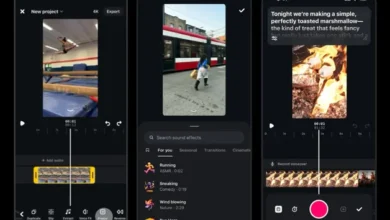
Over the past year, TikTok has added AI Group Shot, which enables users to add images of themselves and their friends to an image template, an AI meme generator, AI-powered translations and captions, video idea generators, image-to-video, AI selfies, custom avatar stickers, and more.
So TikTok’s not exactly falling behind in the broader AI race, but Meta and X have put increased focus on their AI elements, and in particular, their evolving video generation models, as a means to drive more usage of their expensive AI features.
But Seedance 2.0 might just outperform them, which could see TikTok eventually steal their thunder. Which would be a big problem for the social media giants.
The biggest challenge for generative AI is making money, because it costs so much to build AI infrastructure, that just making your initial costs back is going to be a steep climb.
Meta, for example, is planning to spend $600 billion on AI data center projects over the next three years, while OpenAI is forecasting $1.4 trillion in data center investment over the next 8 years.
Which, really, is too much money to even comprehend, but for context, Meta’s full-year revenue for 2025 was just over $200 billion. The two biggest companies in the U.S., Walmart and Amazon, are bringing in just over $681 billion and $638 billion respectively, which shows just how much consumer demand will be required for these AI projects to actually make a profit.
That’s why X is trying to showcase its latest video tools, because it needs to start getting more people to sign-up to subscribe to its tools, so it can at least start heading towards funding its projects, while Meta will also be looking to sweeten its subscription packages with its newer AI models. Because the operating cost is going to necessitate huge revenue intake, across various elements.
And if TikTok comes in with a better, more realistic, more engaging video generation option, that won’t be good news for the respective ambitions of these AI projects.
What’s more, the evolution of Seedance suggests that Chinese developers may well be getting ahead of U.S. companies on AI development. That will not please the U.S. government, which recently outlined its plan to clear roadblocks to AI development, in order to ensure that it leads the way.
Also, now that TikTok U.S. is a separate entity from the main TikTok app, and technically separate from ByteDance, what will that mean for new features like this coming in? WIll the new TikTok USDS management team, which was hand-picked by the Trump administration, even want to add options like this if it means potentially harming or reflecting poorly on America’s own AI development?
As such, the development of Seedance 2.0, and other Chinese AI models, could have significant implications, though we don’t know the details of the codebase or process as yet.
But it’s another reminder that the AI race is global, and that developers in all regions are working with similar technology.
Will the best one win out, and if so, will the U.S. be the leader of the pack?
Source link