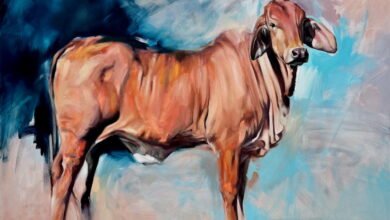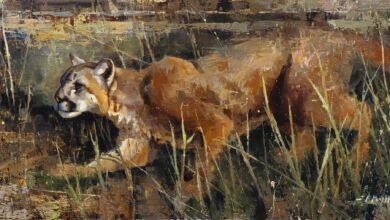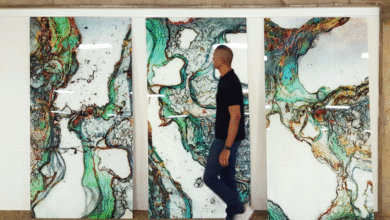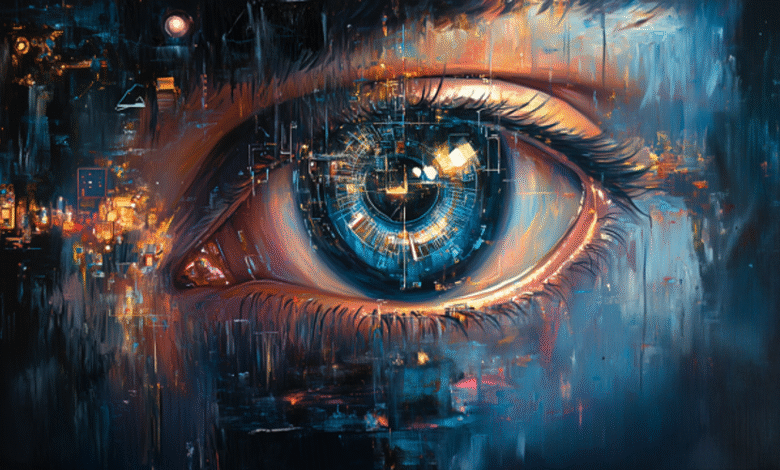
Consider AI generated paintings. You can instruct a model to create an image that looks like a Van Gogh or a Monet. It’s visually stunning, technically accomplished but is it authentic art? If authenticity is tied to the human experience, intentions, or the story of the artist, then maybe not. But if authenticity is also about resonance, meaning and impact on the viewer, can AI-generated art be authentic in its own right?
It’s an issue which has, to coin a modern phrase, gone viral. I’ve been sent a flyer inviting me to help my dog unleash his inner Jackson Pollock. With the help of nontoxic paints, which I am instructed to drizzle over the canvas, pop it in a plastic bag, then spread my treat substance over the upward facing side of the bag. Place the bag somewhere my dog can easily reach it, like the floor, and let the licking begin! Once the activity is over, remove the canvas from the bag, leave to dry, then display his masterpiece. Definitely authentic, but will it sell? If the price of a painting is now calibrated on a scale of authenticity, it should fetch top dollar.
Let’s be serious again and look for a philosophical angle here – the role of the artist is evolving. In the past, artists were craftsmen, visionaries, or rebels. Now, some of the most interesting artistic work is happening at the interface between human and machine. The human becomes more like a curator, prompt engineer, or collaborator with AI. This raises ethical and aesthetic questions: When we outsource creativity to algorithms who owns the work and who deserves the credit?
Another dimension is the viewer’s perception. If I told you that a beautiful painting was AI generated would your appreciation change? There’s some research suggesting that knowing the origin of art affects our response. For instance, some people claim they could never acknowledge any appreciation if told that a painting was done by Hitler. Authenticity might be as much about the story we tell ourselves as about the creation itself.
Let us also consider the ethical side. AI is trained on enormous datasets of existing human work. This raises questions about appropriation and consent. Is it ethical to train AI on artists work without their permission? And what about the social impact – if AI can generate art cheaply what happens to the professional artists. These are not just technical questions, they are deeply human ones, about value, labour, and cultural recognition.
As fellow philosophers we can refer back to Plato – he considered art already suspect – a copy of a copy. The artist imitated appearances, which were themselves imitations of the eternal forms. Art, he thought, was twice removed from truth – already an inauthentic business. Today we celebrate the modern artist as the very model of authenticity, creating something new out of nothing. Kant argued that artistic genius doesn’t follow rules but gives them, and that therefore originality is the mark of true art.
Later thinkers like Nietzsche and Heidegger reimagined authenticity less as originality and more as a kind of revealing. For Heidegger, great art discloses a world; it lets truth happen. Authentic art in this sense is not just true to the artist but somehow true to being itself.
Source link