
NASA Announces Return Date for Evacuating ISS Astronauts
Four ISS crew members are set to touch down on Thursday after NASA announced the first medical evacuation in the space station’s history
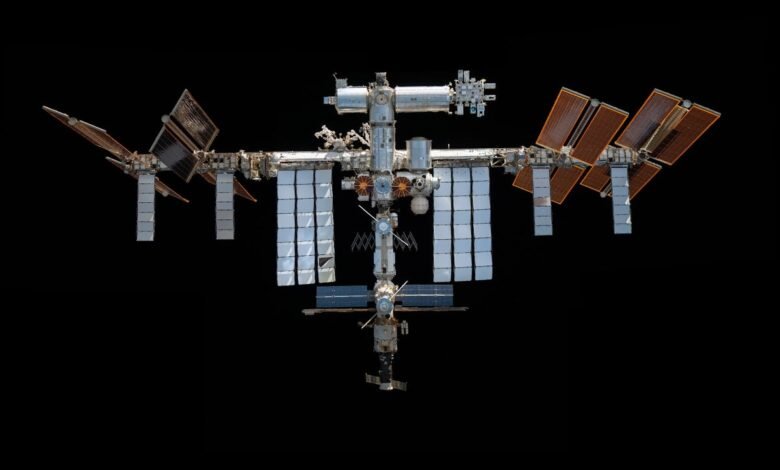
The International Space Station, as seen from the SpaceX Crew Dragon Endeavour spacecraft on November 8, 2021.
NASA has revealed the return date for four International Space Station (ISS) crew members who are being evacuated from the station after one fell ill with an unknown condition.
The crew are set to begin their return to Earth no earlier than 5 p.m. EST on Wednesday, Jan. 14. The SpaceX capsule is then expected to splash down off the coast of California at about 3:40 a.m. EST on Thursday, Jan. 15.
The announcement follows the space agency’s Thursday decision to cut the Crew-11 mission short after an unidentified member of the crew experienced an undisclosed “medical concern.” The medical evacuation marks a first in the space station’s 25-year history.
On supporting science journalism
If you’re enjoying this article, consider supporting our award-winning journalism by subscribing. By purchasing a subscription you are helping to ensure the future of impactful stories about the discoveries and ideas shaping our world today.
The exact timing for the return depends on weather and could change. In a statement, NASA said mission managers are monitoring sea conditions in the spacecraft recovery area. “NASA and SpaceX will select a specific splashdown time and location closer to the Crew-11 spacecraft undocking,” the agency said in a statement.
NASA has not revealed the extent of the sick crew member’s medical issue. When revealing the decision to return the crew early on January 8, Isaacman said the problem was a “serious medical condition” but described the affected crew member as “stable.”
Crew-11 includes two NASA astronauts, the mission’s commander Zena Cardman and its pilot Mike Fincke,as well as Japanese astronaut Kimiya Yui and Russian cosmonaut Oleg Platonov. They had been expected to remain on the ISS until mid-February, when the replacement crew, Crew-12, are still anticipated to arrive.
It’s Time to Stand Up for Science
If you enjoyed this article, I’d like to ask for your support. Scientific American has served as an advocate for science and industry for 180 years, and right now may be the most critical moment in that two-century history.
I’ve been a Scientific American subscriber since I was 12 years old, and it helped shape the way I look at the world. SciAm always educates and delights me, and inspires a sense of awe for our vast, beautiful universe. I hope it does that for you, too.
If you subscribe to Scientific American, you help ensure that our coverage is centered on meaningful research and discovery; that we have the resources to report on the decisions that threaten labs across the U.S.; and that we support both budding and working scientists at a time when the value of science itself too often goes unrecognized.
In return, you get essential news, captivating podcasts, brilliant infographics, can’t-miss newsletters, must-watch videos, challenging games, and the science world’s best writing and reporting. You can even gift someone a subscription.
There has never been a more important time for us to stand up and show why science matters. I hope you’ll support us in that mission.
Source link